PETG Medical Tray Manufacturers: 10 Suppliers for 2026
Compare PETG medical tray manufacturers for custom device packaging, with guidance on material grades, sterilization, sealing and production qualification.
Placon's medical materials portfolio pairs PETG tray capability with BargerGard TPU protection for rough or sharp devices. This is a useful distinction for orthopedic implants and instruments that can abrade a rigid tray during transport. The protective insert and the outer tray perform different jobs, and both need defined device contact surfaces. A package review can therefore consider pocket geometry, local protection and the lid together, with the proposed material combination carried through to distribution and sterilization evaluation.
Dordan's medical tray development guidance discusses PETG, tooling and the practical decisions behind a custom tray. It gives packaging teams a basis for planning prototypes before flange dimensions and sealing equipment are fixed. Early samples can resolve device fit and opening access; samples from the intended production process serve a different purpose in qualification. The quotation should distinguish those stages, including the tooling used at each and the design changes still possible before production tooling is released.
Plastic Ingenuity's catheter packaging case describes PETG hinges and snaps that secure a long device. It offers a concrete reference for reducing separate retention components. A similar concept could be relevant to a catheter family with several lengths or connectors, provided each version can be loaded and removed without unwanted bending. The published result belongs to that particular project. For a new program, the useful evidence is a physical evaluation of the proposed retention features with representative devices.
Jamestown's medical capabilities include PETG thermoforming, design, tooling and cleanroom resources. This combination is relevant to projects with several packaging formats or a development schedule that requires frequent design iterations. The manufacturing plan should show where forming, trimming, inspection and bagging occur. Those operations may have different environmental requirements, and a general statement about cleanroom availability leaves their allocation unresolved. Facility-specific documentation makes it possible to compare the proposed route with the device manufacturer's contamination-control requirements.
Brentwood's long medical trays address a constraint that can narrow a catheter-packaging shortlist quickly: the complete tray length. Published capabilities distinguish cleanroom work from other production conditions. The relevant envelope includes the flange and handling margins as well as the device. For a long, flexible product, allowable curvature and the removal sequence belong in the design brief. They influence whether the package can retain the device securely while leaving a usable grip area during opening.
Nelipak lists PETG among the materials for its medical trays and blisters, covering applications from orthopedic devices to procedure sets. Its packaging and tooling development capabilities are relevant when several components share a tray and must be presented in a deliberate sequence. The drawing should distinguish retention contacts from clearance areas and identify any additional protective materials. That makes the assembly understandable to both the packaging developer and the team responsible for loading it at production speed.
Janco's medical packaging services include custom trays, while its thermoforming material list explicitly includes PETG. Its broader foam and fabrication work makes it relevant to packages with several protective elements. The commercial scope needs to identify which components are formed, converted or sourced, with a material specification for each. Delivering those elements as one assembly can simplify purchasing, provided their identification and change records remain connected to the approved package construction.
Averra separates custom medical trays and dunnage in its tray portfolio, which lists PETG and support from design through quality assurance. It is a candidate when a device needs both production handling and a final package. These trays can share a development contact while retaining different requirements. The work-in-process tray might prioritize repeated loading and transport between stations; the final tray must meet its specified packaging role. Separate drawings and acceptance criteria prevent those two purchases from becoming an ambiguous common specification.
Macpac provides a UK option through its pharmaceutical packaging portfolio, which includes PETG, procedure trays and custom toolmaking. It is relevant to bespoke packaging developed around a particular packing operation or presentation. The published production and quality information provides an initial screening basis, but the proposed medical project still needs its own manufacturing route. In particular, a packaging quality-system claim does not establish a cleanroom classification or the qualification status of a tray-and-lid combination.
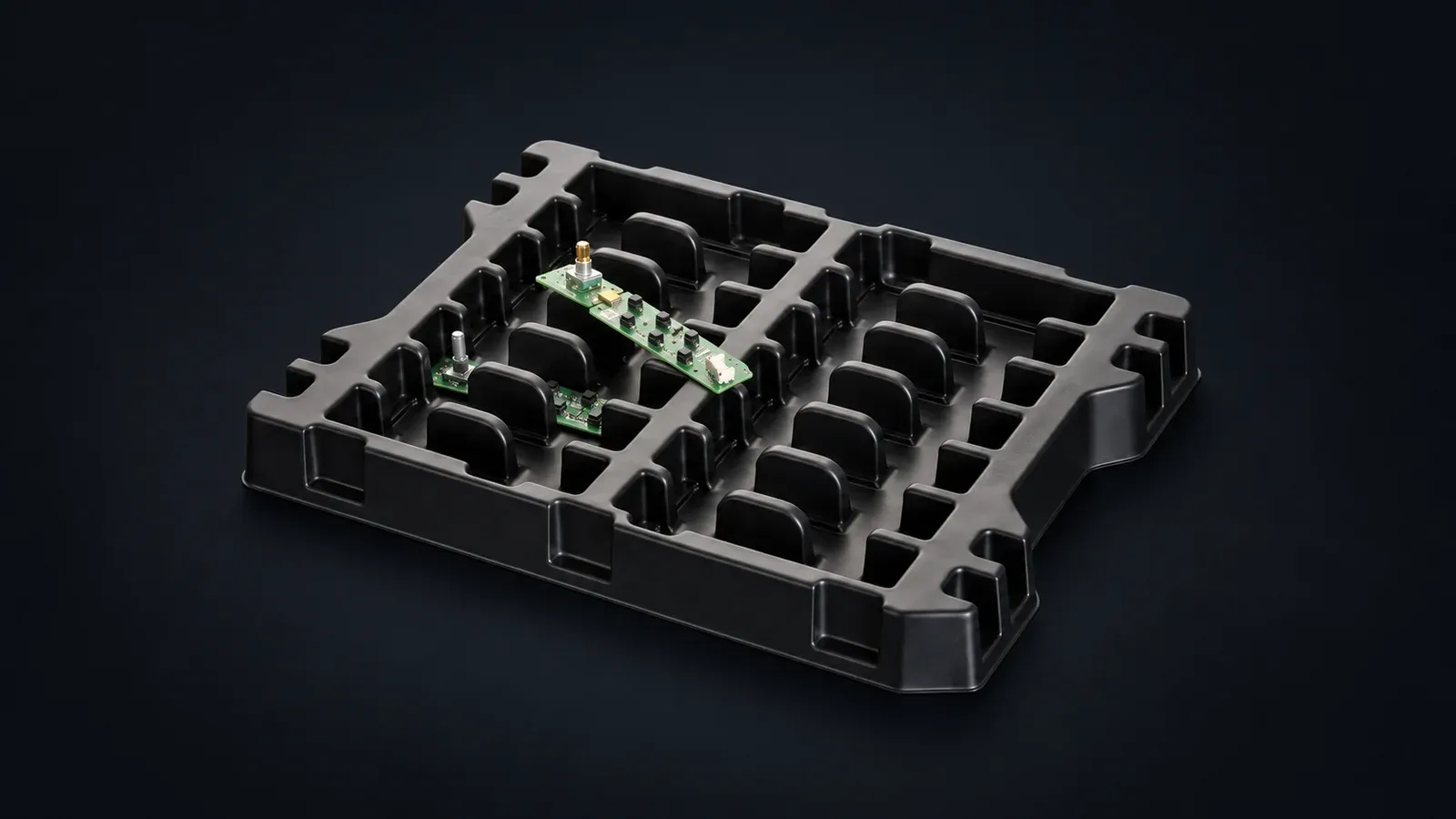
A medical tray usually begins as sheet heated and formed against a tool. Trimming establishes the outline and flange; formed pockets locate the device and can organize a kit for use. The same broad process serves a transport carrier, a protective insert and a component of a sterile barrier system. The required evidence depends on which of those roles the tray performs.
For terminally sterilized devices, ISO 11607-1 addresses materials, sterile barrier systems and packaging systems. ISO 11607-2 addresses validation of the processes used to form, seal and assemble them. Material selection and process validation therefore belong in the same development schedule. An empty tray supplied to a device manufacturer may be only one element of the final system.
The package architecture establishes where responsibilities meet. A single tray with a sealed lid, nested trays and a tray inside another sterile barrier create different loading and opening sequences. The specification should name the barrier, protective packaging, lid construction and sealing operation. A written allocation of responsibilities is especially valuable when forming, device loading and sterilization take place at different companies.
Device retention also affects how the package is opened. Deep clips may hold a component firmly during shipping yet make it awkward to remove. Sharp edges can contact a tray wall or lid as the package flexes. A physical review with representative devices reveals these interactions more clearly than a rendering. It should include the intended opening direction, accessible grip areas and the order in which kit components are removed.
PETG is glycol-modified polyethylene terephthalate. The grade, sheet formulation and construction need to be identified in the purchase specification. Clear appearance alone cannot distinguish an approved PETG from another polyester or establish equivalent performance after processing and storage.
Eastman's sterilization guidance for Eastar 6763 supports appropriately controlled ethylene oxide, gamma and electron-beam processing for that copolyester. It also warns that excessive temperature, humidity, energy exposure or dwell can affect package properties. These are grade-specific processing considerations, not a universal sterilization approval for PETG. Steam-autoclave suitability must not be inferred from compatibility with EtO or radiation. The packaging team needs evidence for the actual cycle, material and completed package.
Forming redistributes the sheet. The starting gauge describes incoming material; the wall beside a deep pocket or retention feature can be substantially different. The drawing should identify regions where thickness affects protection, retention or puncture resistance. Measurements from production-representative trays can then establish whether those regions meet the agreed criteria.
The flange is a functional interface with the lid and sealing equipment. Its width, condition and flatness deserve explicit requirements, along with handling practices that protect it before sealing. A tray can hold a device correctly and still create difficulty on the packaging line if the flange does not sit properly in the sealing fixture.
Trays also arrive in stacks. Denesting behavior, orientation and the way operators handle empty trays affect line performance. A trial using a realistic stack can expose sticking or awkward separation before a large order is placed. Changes to geometry, additives or surface treatments that improve feeding belong under the same approval process as other material and design changes.
A useful qualification plan separates three questions: whether the device fits, whether the manufacturing process produces the specified tray, and whether the completed packaging system performs as required. Each question needs appropriate samples and an identifiable approval record. A fit prototype may answer the first while leaving the other two open.
Production samples should be traceable to the tool, sheet specification, site and drawing revision. If prototype tooling or a different forming route was used, the development record should explain the differences. This avoids treating an early sample as evidence for a process it never experienced.
Environmental requirements need similar precision. Cleanroom classification, quality-system certification and sterility describe different matters. Procurement needs the named facility and the operations covered by the proposed controls, including any work after the tray leaves the forming area. The required handling and bagging conditions follow from the package specification; they cannot be established by a supplier's general medical-market description.
Package evaluation then considers the intended sterilization, distribution and shelf-life conditions under the device manufacturer's approved protocol. Seal strength and package integrity answer different questions and should not be collapsed into one generic “seal test.” The responsible packaging team selects the methods, sample plan and acceptance criteria for the particular construction.
Change control keeps that approved construction identifiable. Relevant changes can include sheet formulation, tool repairs, forming conditions, subcontracted work and production location. The supply agreement should identify who receives notification and who decides whether additional evidence is needed. A brief decision record covering the selected design and material helps later reviewers understand why an apparently small substitution matters.
For an existing tray transfer, access to tooling alone rarely describes the full task. The receiving team also needs drawings, material identification, inspection requirements and available process history. Gaps in those records become explicit transfer activities with owners and deliverables.

The price comparison becomes meaningful once all bidders quote the same package boundary. One offer may include tray design and tooling; another may also include protective inserts, lids, sealing development or qualification support. A common scope sheet makes those differences visible before unit prices drive the decision.
A focused enquiry contains:
Development costs include prototypes, tools, fixtures and engineering iterations. Recurring costs include the formed tray, other package components, inspection, delivery packing and freight. Later expenses can arise from revisions, duplicate tooling or transfer support. Quoting those items separately gives purchasing a basis for evaluating changes without reopening the entire program.
Demand assumptions deserve particular attention during a medical-device launch. A slower ramp, smaller releases or an additional variant can affect sheet purchasing and production scheduling. Supplier responses to those scenarios are more useful than an unsupported industry lead time or savings percentage. The agreed launch plan should also allow time for sample review and document delivery, since those dependencies can govern commercial release as much as tray production does.
No. PETG is a material choice. Sterility and maintenance of the sterile barrier depend on the completed packaging system, sterilization process and relevant validation. The tray supplier's material documents support that work but cannot establish the performance of a package assembled and sealed elsewhere.
Compatibility is specific to the grade and processing conditions. EtO or radiation data does not establish steam-autoclave suitability. The selected sterilization route should be considered before the material and package design are frozen, with the completed construction assessed under the intended exposure conditions.
A substitution requires review by the responsible packaging team. Similar clarity and initial fit do not establish equivalent aging, sterilization or mechanical behavior. Eastman's PETG and APET study illustrates why results must be tied to particular materials and conditions; it does not qualify every available grade.
CAD supports early geometry and pricing work. Physical samples become important when retention, sharp contacts, loading or removal must be assessed. The development plan should identify which approvals depend on representative devices and which dimensions remain provisional until those samples are available.
For device components, see medical cleanroom injection molding companies. For electronic assemblies moving through production, compare ESD thermoformed tray manufacturers; their electrical handling requirements differ from the final medical package specification.
Photo: Dordan. Lighting and background adjusted; product geometry retained.
Choose a heavy gauge thermoforming machine around your parts, materials and output, with ten suppliers and guidance on heating, tooling and acceptance trials.
Read guide