Heavy Gauge Thermoforming Machine: 2026 Supplier Guide
Choose a heavy gauge thermoforming machine around your parts, materials and output, with ten suppliers and guidance on heating, tooling and acceptance trials.
MAAC focuses on cut-sheet equipment, with rotary and shuttle configurations for vacuum, pressure and twin-sheet forming. Its range supports a comparison between different layouts before a factory fixes the production-cell design. Tool access, loading, cooling and changeover frequency should guide that choice. For twin-sheet work, the proposal also needs to describe the joining regions and tooling arrangement. The supplier's overall process range establishes options for discussion; the purchased capability is the specific machine and equipment package in the contract.
GEISS's T11 platform includes configuration-dependent pressure-forming and twin-sheet options alongside industrial vacuum forming. The company's CNC trimming and automation offering makes it relevant when forming and finishing are being planned together. The interface between those operations deserves particular attention: the part needs a repeatable location for unloading, transfer and machining. A cell proposal should identify that datum strategy and the equipment responsible for preserving it, including support for flexible shells before they reach the trimming fixture.
Tools Factory develops vacuum-forming equipment and CNC finishing systems. Its application guidance describes sheet-fed forming, automatic material handling and CNC trimming for materials including ABS and PMMA. This makes it a relevant contact for buyers planning a forming-to-finishing route. The enquiry should define sheet gauge, draw depth and the selected material family so the supplier can identify an appropriate configuration. Tool-changing space and heater-service access also belong in the layout review, particularly for installation in an existing workshop.
THERMOFORA's vacuum-forming range spans compact machines through large-format systems, including VORION PRO. The portfolio is relevant to industrial covers, panels and other sheet-formed components, with model selection dependent on material thickness and geometry. The useful comparison concerns the offered heater arrangement, sheet support, forming depth and automation. A larger advertised format should be evaluated against the actual part mix, including the smaller tools and sheet sizes that may use the same machine during ordinary production.
CMS Plastic Technology is the relevant machinery business within SCM Group. Its Masterform system supports vacuum, pressure and twin-sheet processes, with independently heated sheets in the twin-sheet arrangement. CMS's broader machining portfolio also makes it relevant to projects involving CNC finishing. The quotation needs to identify the selected forming mode, tooling envelope and included handling equipment. Features elsewhere in the group portfolio should appear as explicit line items if they are part of the proposed cell.
Cannon's thermoforming equipment portfolio includes vacuum, pressure and twin-sheet processes, alongside other forming and covering technologies. It is relevant where the component involves a specific material structure or more than an open shell. The initial technical response should identify the Cannon business and equipment platform responsible for the proposed application. A defined process sequence then makes it possible to evaluate tooling, sheet handling and any operations performed inside the cell against competing offers.
ILLIG's UAF sheet-processing range provides direct heavy-gauge capability. The published range covers 2–10 mm sheet and forming areas up to 3000 × 2000 mm, with different sizes and draw depths across the models. This is the relevant industrial sheet-processing reference within a broader portfolio that also includes packaging machinery. The proposed UAF size still needs to accommodate the tool, draw and handling arrangement. A trial should use the intended material specification and include cooling and unloading in the production sequence.
BMG includes the Brown machinery brand. Brown's manufacturer-authored RV Series brochure documents heavy-gauge rotary vacuum forming, with overlapping loading, heating, forming and unloading operations. It is historical product evidence, not confirmation that the same model is currently sold. A new-machine enquiry or an installed-base upgrade should therefore begin with BMG confirming the supported platform and delivery scope. The response needs to distinguish new equipment, an equivalent configuration and service for an existing Brown machine.
Belovac presents its E-Class range as manual sheet-fed vacuum-forming equipment with dual heating for heavy-gauge or difficult-to-heat materials. Its wider portfolio includes automated and large-format configurations. This makes operating method an important distinction when comparing offers: manual loading, access to the formed part and operator involvement affect the production plan. A representative trial should establish repeatable heating and cooling with the intended staffing, while the quotation states exactly which handling functions are included.
Heavy-gauge thermoforming commonly starts with separately loaded thermoplastic sheets. Heating makes the material formable; vacuum, positive pressure and sometimes mechanical assistance bring it against the tool. The part cools enough to retain its shape before removal. Trimming, drilling, bonding or assembly can then turn the formed shell into a finished component.
The terms heavy gauge, thick gauge and cut sheet help identify a machinery category, but they do not define a complete operating envelope. Grade, starting thickness, depth and final wall requirements interact. A machine suitable for a shallow panel may need a different configuration for a deep housing made from another material. CMS's thermoforming overview provides background on industrial sheet applications and process choices.
Vacuum forming is relevant to open covers, liners and panels. Pressure forming adds positive air pressure and can produce more defined tool-side detail, with corresponding requirements for clamping, sealing and tooling. GEISS's process overview explains that process. A vacuum machine does not acquire that capability through a control setting alone; the required equipment must be in the selected configuration.
Twin-sheet forming shapes and joins two heated sheets to create a hollow structure. The joining surfaces, internal contacts and sheet-heating sequence need to be designed together. MAAC's twin-sheet reference offers a starting point for reviewing the construction. Qualification must address the joints as well as the visible surfaces.
Layout governs how operations overlap. Rotary machines move successive sheets through stations; shuttle systems offer a different loading and tooling arrangement. Single-station equipment can suit development work, frequent changes or lower output. The relevant comparison uses the planned product mix and staffing, including the time needed for acceptable parts to reach the next operation.
Heating is a central constraint in thick-sheet work. The surface and interior need time to reach a suitable forming condition, and material grade, color, texture and gauge influence the response. A heater recipe established for one sheet cannot automatically cover every approved material or thickness.
The technical proposal should describe heater zoning, upper and lower heating where applicable, sheet-temperature monitoring and the control of sag. These functions need to be assessed together in a representative trial. The target is a repeatable sheet condition across the usable area, including locations feeding deep pockets or adjacent features.
Starting gauge and finished wall are separate acceptance points. A wall-thickness map can identify the regions that govern stiffness, fastening or impact performance. The trial record should retain the material identification, heating settings, forming sequence and cooling conditions alongside the measurements. This gives the buyer a baseline for evaluating later adjustments.
Tool temperature and cooling also affect release and dimensional stability. A short forming step does not establish a short complete cycle if the part must remain on the tool before it can be removed safely. Cooling and handling should therefore be part of the measured production sequence, including any support required after demolding.
Material preparation belongs in the cell plan. Storage, conditioning and drying requirements should follow the sheet producer's guidance for the selected grade. The machinery quotation needs to state whether the required equipment and material-handling provisions are included or supplied separately. An application trial conducted with carefully prepared sheet should record that preparation so ordinary production can reproduce it.
A machine demonstration is most useful when it addresses the hardest planned application. The trial part should represent relevant draw depth, surface requirements and material behavior. A convenient flat panel may demonstrate operation while leaving the buyer's main production uncertainty untouched.
The forming tool and machine must fit together physically and functionally. The review needs the usable forming area, tool height, movement, mounting and utility connections. Nominal sheet size can differ from the area available after frames, seals and tooling are installed. Space for unloading and changing tools should be visible in the layout as well.
Trimming deserves a parallel review. The finished shell needs a defined datum and support arrangement, particularly if it is large or flexible. Transfer equipment and fixtures should protect cosmetic surfaces and locate the part consistently. Where one supplier provides forming equipment and another provides machining, their interface needs an identified technical owner.
Factory acceptance testing should specify the material, tool, run duration and part characteristics to be measured. Output figures need a defined start and finish, including ordinary loading, cooling and unloading. Scrap and interventions should be recorded so the result describes the agreed operating conditions. A headline cycle time has limited value if downstream trimming cannot absorb that output.
A site acceptance test then addresses the installed cell and its utilities. Material access, finished-part movement, changeovers and routine maintenance should be demonstrated in the intended layout. Training and documentation belong in the handover, together with the agreed recipes, programs and maintenance information.
Service capability also needs a delivery-region answer. The contract should identify commissioning support, spare-parts arrangements and the route for resolving control or process problems. Remote diagnostics can assist troubleshooting, but the buyer still needs to understand which activities require a technician on site and who supplies that support.
The installed cost includes the machine plus the equipment and services needed to produce accepted parts. Tooling, trimming, fixtures, vacuum, compressed air, cooling, electrical work, transport and training may fall into different suppliers' scopes. A responsibility schedule keeps omissions visible while quotations are being compared.
A useful enquiry provides:
Operating-cost comparisons need common assumptions for material usage, rejects, labor, energy and maintenance. The source of each figure matters: measured trial data, supplier estimates and buyer forecasts should remain distinguishable. Different heater or drive technologies can then be assessed under the same production schedule instead of through unrelated brochure percentages.
Changeovers can materially affect usable capacity. A tool change may also require frames, cooling connections, pressure equipment, recipes and trim fixtures to be changed. Frequent small batches therefore deserve a demonstrated changeover sequence. The investment model should allow for the time until acceptable production resumes.
Tooling, fixtures and process records also influence the cost of adding products later. The agreement should state what the buyer owns, which files are delivered and which future engineering work is chargeable. Clear handover terms make repairs, additional tooling and product revisions easier to plan.
Suitability depends on its sheet-heating capability, clamping, forming process, tooling envelope and cooling arrangement. The supplier needs the actual material and geometry to confirm the operating range. A heavy-gauge label or large forming window alone cannot establish the result for a particular part.
The useful size accommodates the planned tooling and handling while fitting the product mix. Excess space can change sheet consumption, heating demand and the factory layout. A right-sized machine and a larger alternative should be compared using the same parts and production assumptions.
Some platforms offer all three through specific configurations. The quotation needs to identify the equipment, tooling and controls included for each process. Retrofitting a capability later may involve more than software, so foreseeable requirements should be discussed before the original machine is specified.
Use accepted parts over an agreed representative run, with the cycle boundaries and operating conditions recorded. Loading, heating, cooling, unloading, rejects and interventions need a common treatment. For a complete cell, trimming and transfer capacity also affect the rate at which finished parts can leave production.
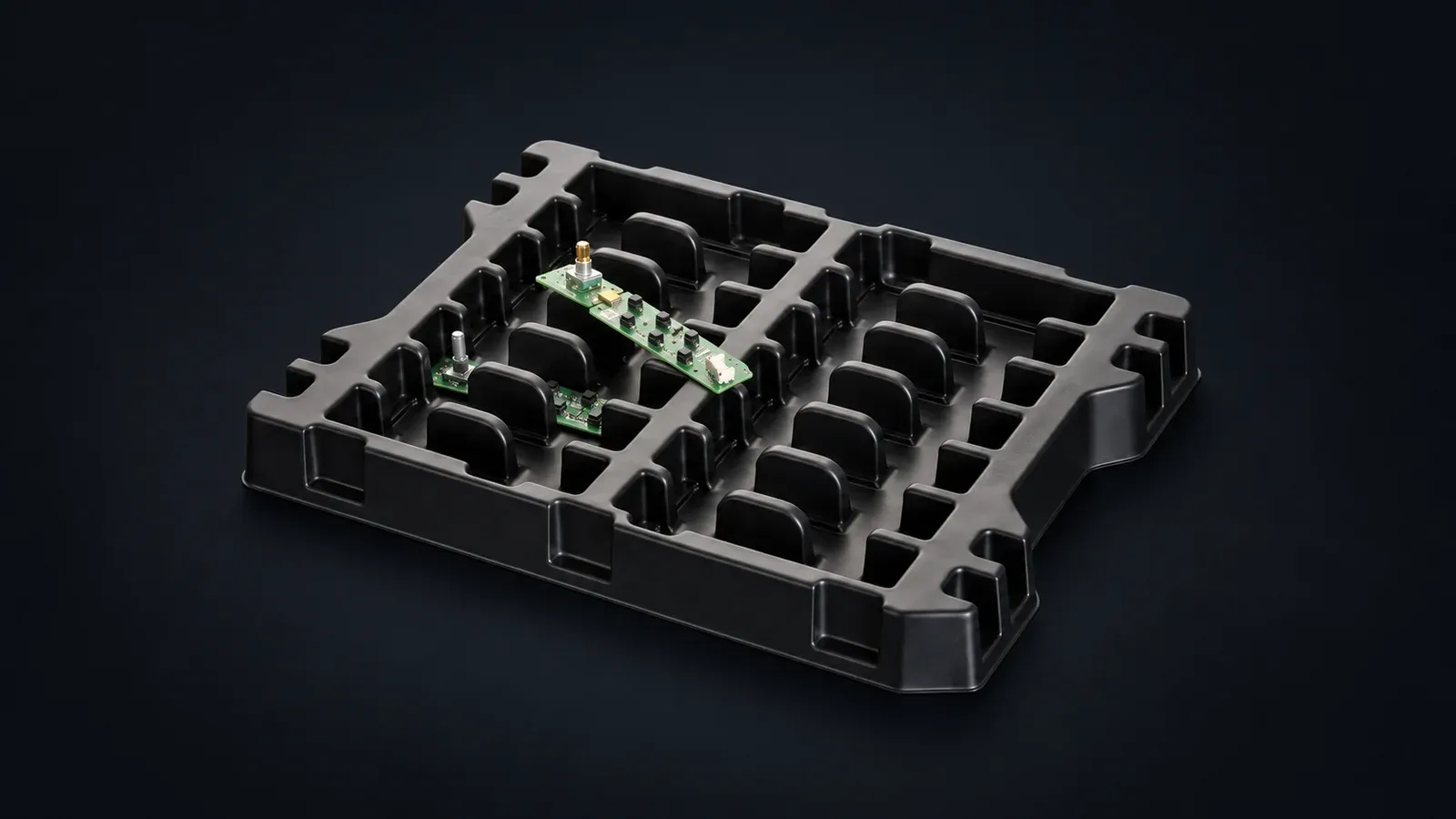
For outsourced production or a make-or-buy comparison, see thick gauge ABS thermoforming companies. For trays handling sensitive electronics, the ESD thermoformed tray guide explains the material and finished-part evidence that the production process must support.
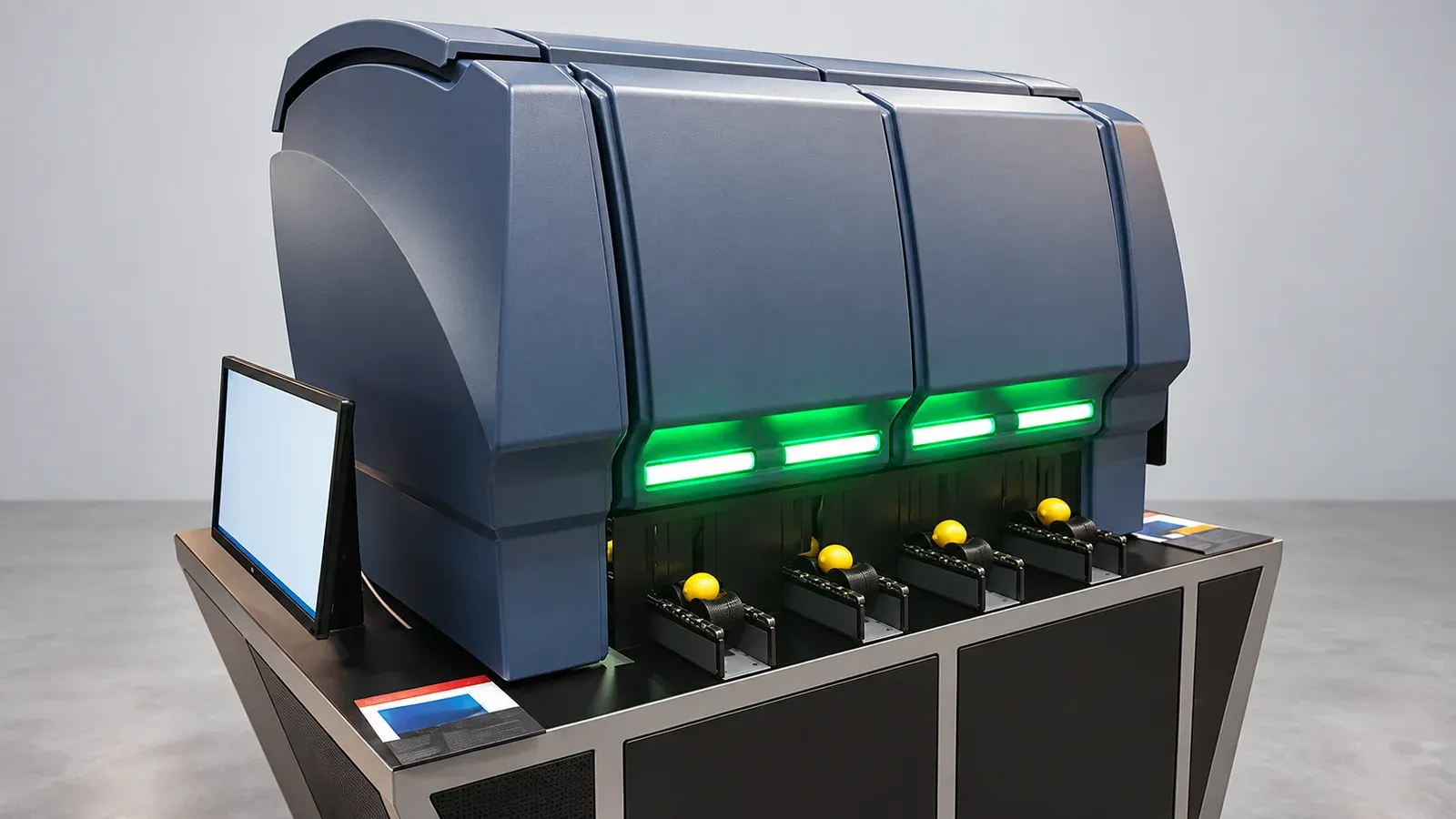
Photo: Machinecraft equipment in a factory, supplied by the site owner. Lighting adjusted and playback graphics removed; equipment details retained. The photograph does not identify a particular quoted machine configuration.
Compare ESD thermoformed tray manufacturers by material construction, finished-part evidence and the handling route, including automation and reusable trays.
Read guide