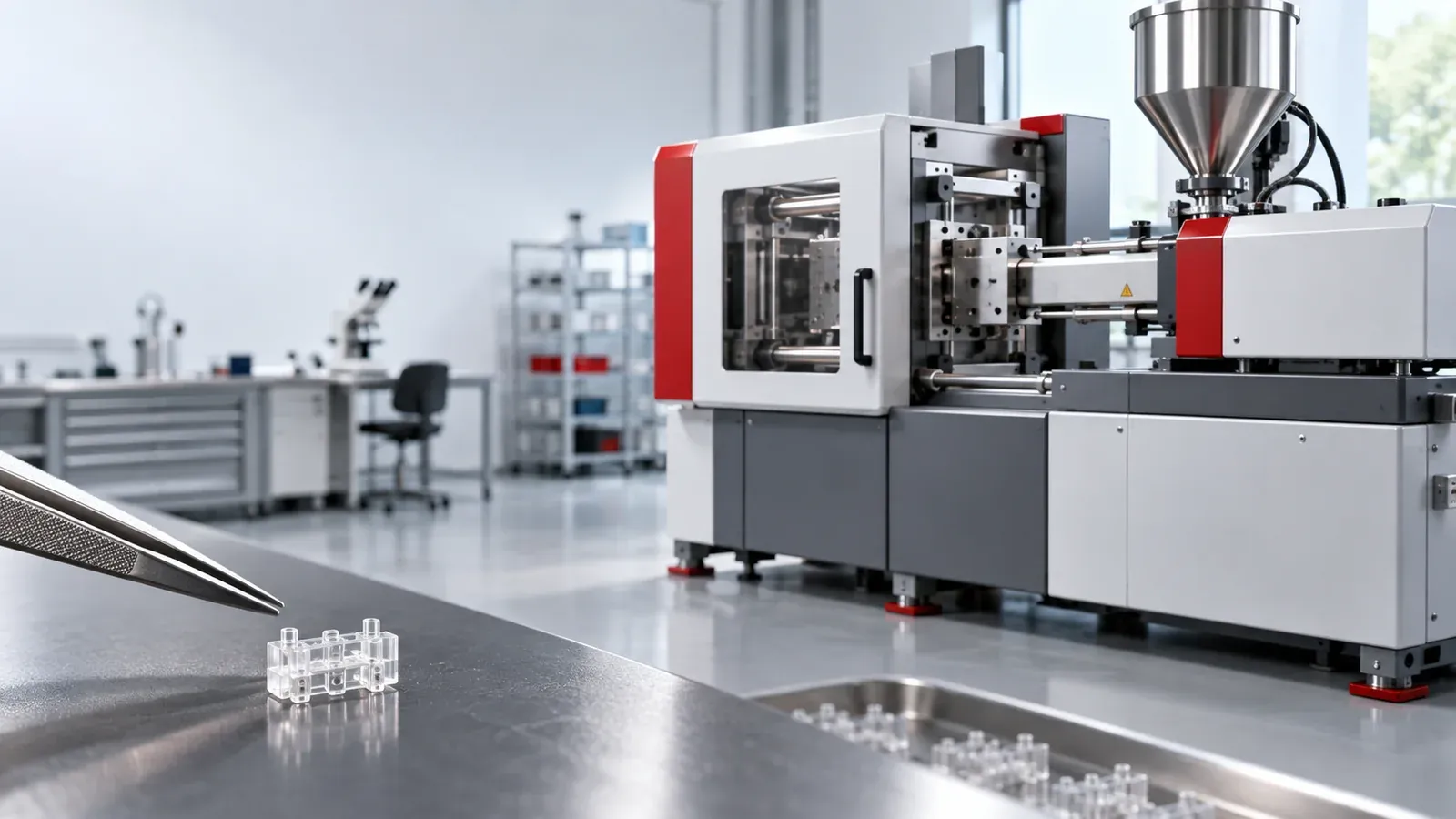
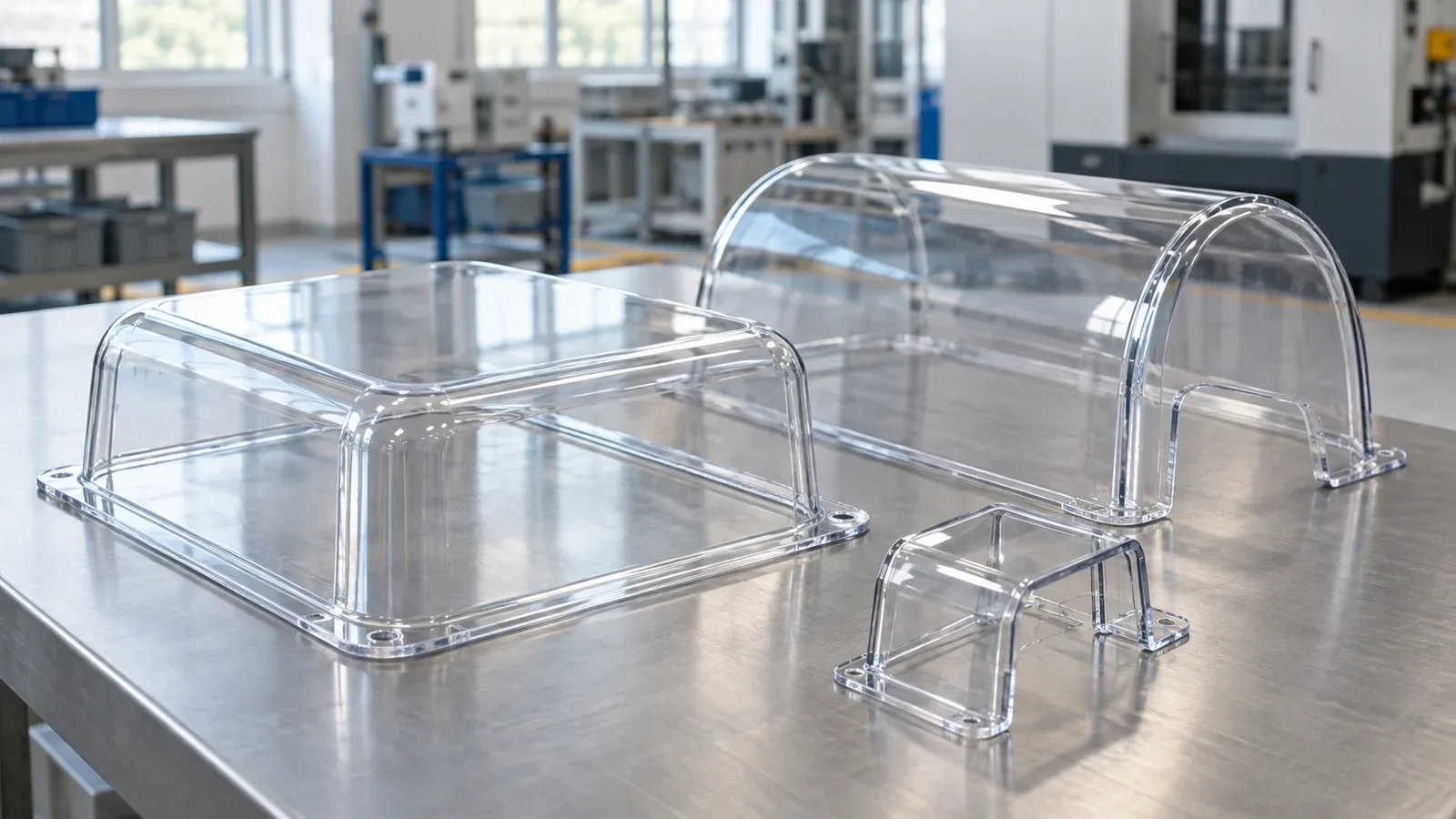
The 30th Fakuma will introduce its first Innovation Award in October 2026, with thermoforming included alongside tool and mold making in one of six technology categories.
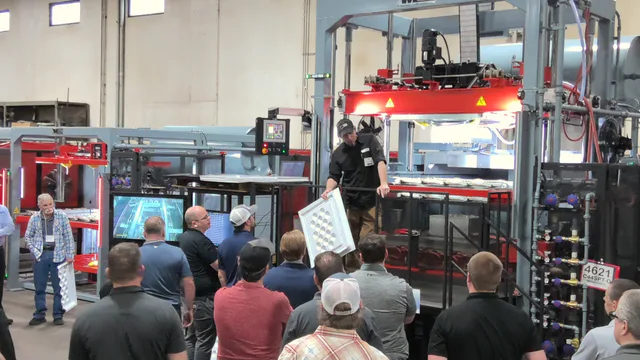
Image source: Fakuma / P. E. Schall. Official image used in the July 21, 2026 Fakuma event release.
Fakuma 2026 is giving thermoforming a visible place in one of the main new features of its 30th anniversary edition. The international plastics processing trade fair will introduce the Fakuma Innovation Award for the first time, and thermoforming is included in one of the competition's six technology categories.
The event will take place at Messe Friedrichshafen in Germany from October 12 to 16, 2026. Fakuma covers a broad range of plastics processing technologies, including injection moulding, extrusion, forming technologies, tooling, raw materials, process equipment and recycling.
Join PlasticParts Hub
Create an account to connect with companies and send RFQs.
For companies working in thermoforming, the most relevant development is the award category officially titled Tool and Mold Making / Thermoforming. The category places thermoforming alongside the tooling technologies that often determine whether a forming process can deliver the required wall distribution, repeatability, cycle time and part quality.
The award is more than a conventional product announcement competition. Entries have to be demonstrated at Fakuma 2026 as a production-ready product, a working prototype or a technology shown live. That requirement could make the award particularly relevant to an industry where process performance is often easier to evaluate on a machine, tool or real formed part than in a brochure.
A new award for Fakuma's 30th edition
The 2026 event marks the 30th Fakuma. To accompany the anniversary, organizer P. E. Schall and trade publication K-ZEITUNG are launching the Fakuma Innovation Award as a new platform for technology suppliers and plastics processors.
Six categories have been announced:
Injection Molding
Extrusion
Recycling
Tool and Mold Making / Thermoforming
Compounding & Materials
Enablers of Plastics Technology / Auxiliary Equipment
The categories span much of the plastics processing value chain. For thermoforming companies, this creates an opportunity to compete in a programme that is integrated into a major multi-process plastics exhibition rather than a thermoforming-only event.
That distinction matters. Many thermoforming developments increasingly depend on technologies that sit outside the forming machine itself: sheet extrusion, material formulation, tooling, heating, cooling, sensors, automation, trimming and production data systems. A broad exhibition can make those connections more visible.
Live demonstration is the key requirement
One of the most important rules of the new award is that the submitted innovation must be shown live at Fakuma 2026.
According to the organizer, an entry can be a market-ready product, a functional prototype or a technology concept demonstrated in operation. Participation is free, and the submission deadline is September 6, 2026. Entries will be evaluated by an independent expert jury, with the winners announced on the first day of the exhibition.
For thermoforming, live demonstration is a meaningful criterion because many important improvements are process-related rather than purely visual.
A new forming tool, for example, may be valuable because it improves material distribution or cooling. A heater system may reduce temperature variation across the sheet. A plug-assist concept may improve the minimum wall thickness in a deep draw. Automation may shorten changeovers or make process settings more repeatable.
Those benefits are often difficult to communicate with a product photograph alone. Demonstrating the technology under realistic conditions gives visitors a better opportunity to understand how the innovation affects the process.
What could qualify as a thermoforming innovation?
Fakuma has not published a list of thermoforming-specific subcategories, so the final scope will depend on the submitted projects and jury assessment. However, the combined Tool and Mold Making / Thermoforming category could logically attract developments from several parts of the forming process.
Potential areas may include:
forming and trimming tools with improved cooling or venting;
plug-assist systems and technologies for better wall-thickness distribution;
zoned or adaptive heating systems;
faster tool-change and setup concepts;
forming systems designed for recycled, bio-based or difficult-to-process sheet materials;
inline quality monitoring and process-control systems;
automation for part handling, stacking and downstream operations;
technologies that reduce scrap, energy use or cycle time;
digital tools that help operators stabilize or troubleshoot the thermoforming process.
These are editorial examples rather than announced award entries, but they show why combining thermoforming with tooling can make technical sense. In thermoforming, the tool, material and process cannot be evaluated independently from one another.
Why tooling deserves attention in thermoforming
Thermoforming is sometimes described primarily as a machine process, but the mould and associated tooling strongly influence the finished part.
Tool temperature affects cooling and cycle stability. Venting determines how effectively air is removed from between the sheet and the mould surface. Surface geometry and radii affect material stretch. Plug shape, timing and material can influence wall distribution. Trim tooling determines whether a formed part can be converted into a repeatable finished component at production speed.
As parts become lighter and sheet gauges are reduced, these relationships become even more important. Less starting material generally leaves less margin for poor distribution, inconsistent heating or uncontrolled stretching.
This makes the award's combined tooling and thermoforming category relevant not only to machine builders but also to toolmakers, process specialists and suppliers of supporting technologies.
Fakuma positions itself as a practical technology show
The organizer describes Fakuma as a working trade fair focused on market-ready innovations and practical benefits for plastics processors.
That positioning fits the format of the Innovation Award. Rather than assessing concepts that exist only as presentations, the competition requires the technology to be present at the exhibition in a form visitors can see operating or evaluate directly.
For thermoformers attending the show, this could create a useful filter. Award entries in the thermoforming category may point visitors toward technologies that are sufficiently developed to be demonstrated in an industrial exhibition environment.
The broader Fakuma programme will also include technical presentations, a startup area, a round-table discussion and career-focused activities. The 2026 round table will address the resilience of the European plastics industry, including cost structures, raw-material dependence and the transition toward a circular economy.
These issues are closely connected to thermoforming. European processors are under pressure to improve material efficiency, manage energy costs, process more recycled content and maintain competitiveness while meeting increasingly demanding product and sustainability requirements.
A useful platform for thermoforming suppliers
Fakuma is not exclusively a thermoforming exhibition, but that can be an advantage for suppliers serving the sector.
A thermoforming line depends on an ecosystem of technologies. The sheet may originate from an extrusion line. The material may contain recycled or functional layers. The forming process depends on heaters, controls, tooling, vacuum and pressure systems. Finished parts may require robotic handling, inspection, trimming or recycling of skeletal scrap.
At a multi-process plastics exhibition, thermoforming companies can compare developments across those adjacent areas rather than looking only at forming machines.
The new award adds another reason to watch the 2026 edition because it gives thermoforming innovations an explicit route into the event's anniversary programme.
What exhibitors need to know
For companies considering an entry, the main practical points are straightforward:
Event: 30th Fakuma International Trade Fair for Plastics Processing
Relevant award category: Tool and Mold Making / Thermoforming
Entry deadline: September 6, 2026
Participation fee: Free of charge
Demonstration requirement: The innovation must be shown live as a production-ready product, working prototype or demonstrated technology
Award ceremony: First day of Fakuma 2026
For exhibitors already planning to bring a new thermoforming machine, tool, process-control system or related technology to Friedrichshafen, the award could provide additional visibility around the launch.
Why this matters for the thermoforming industry
The most important aspect of the Fakuma Innovation Award is not simply that another industry prize has been created. It is that thermoforming has been explicitly included in the competition structure of a major European plastics processing event.
Thermoforming often competes for attention with much larger injection-moulding and extrusion sectors at broad plastics exhibitions. A named category makes it easier for forming technologies to be recognized as a distinct area of innovation.
The live-demonstration rule may also favour practical engineering. Technologies that improve material distribution, productivity, energy efficiency, tooling performance or process stability can be evaluated in the context where they matter most: production.
As Fakuma approaches in October, Thermoforming Hub will be watching the exhibitors and award submissions for technologies with direct relevance to sheet forming, tooling, automation, materials and production efficiency.
The first Fakuma Innovation Award could provide an early indication of which thermoforming developments the European market considers most important in 2026.
PPWR and Thermoformed Trays: What to Put in Your Packaging Specification
A practical PPWR checklist for buyers of PET and PP trays: phased dates, complete-pack specifications, food-contact evidence and recycled-content records.