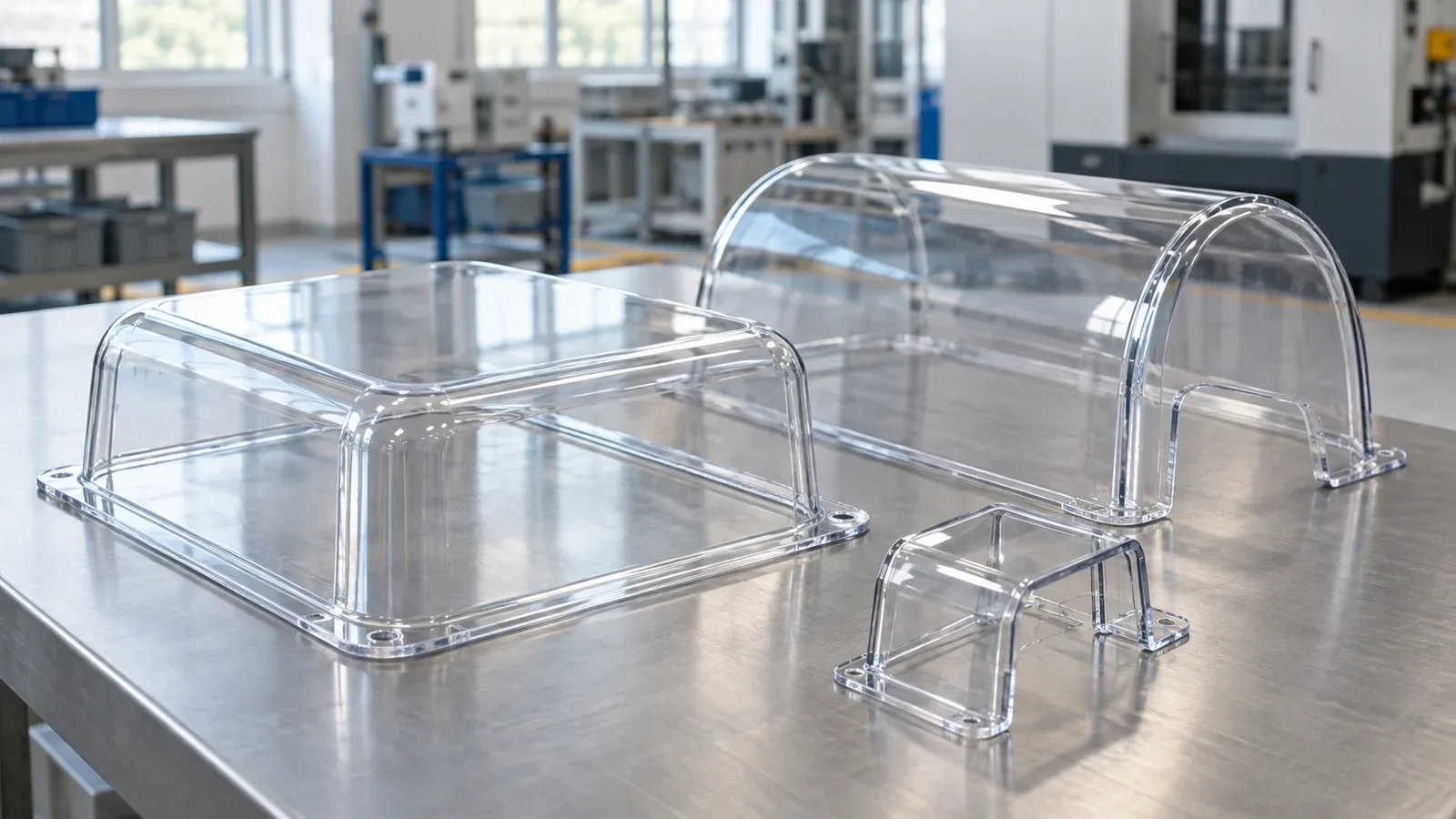
Hungarian thermoformer Kurucsai Plastic is producing PET sheet on a Gneuss MRS 110 line that handles virgin PET, bottle flakes and regrind without conventional pre-drying.
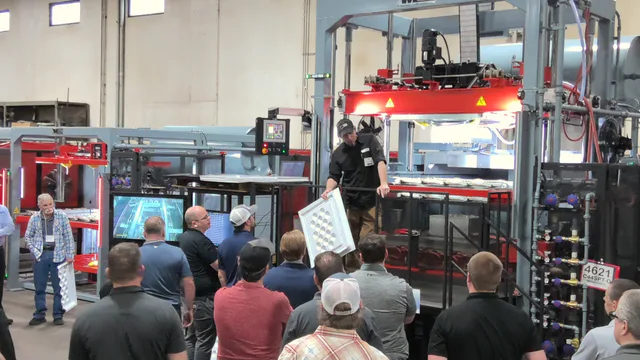
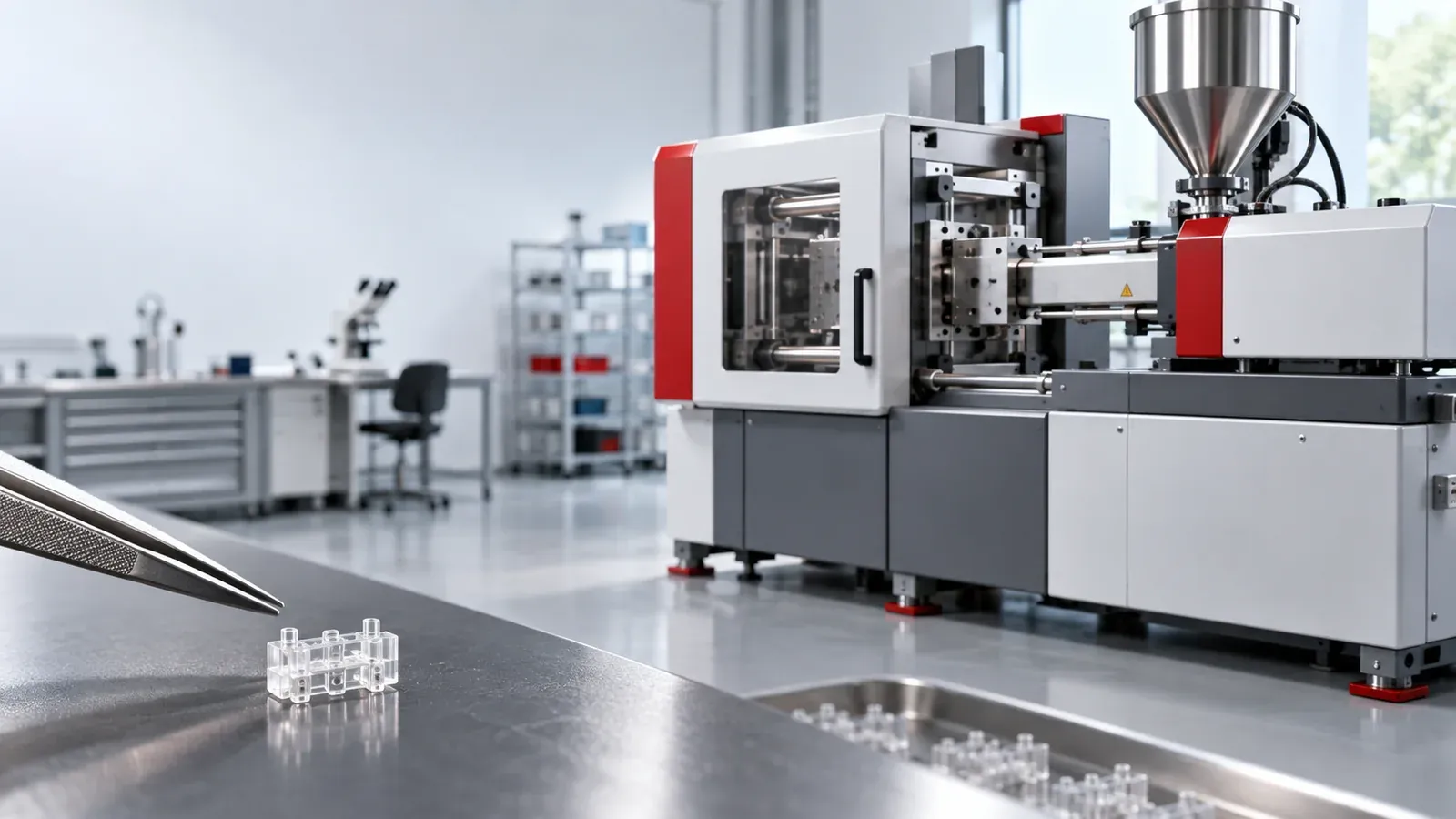
Image source: Gneuss. Gneuss MRS extrusion equipment at Kurucsai Plastic.
Kurucsai Plastic's latest extrusion investment is not simply a capacity upgrade. It changes the range of raw materials the Hungarian thermoformer can use for food-packaging sheet.
The company has been running a Gneuss MRS 110 extrusion line since early 2025 as part of a gradual move from polypropylene to PET. The line produces PET sheet that is fed directly into the company's thermoforming equipment, and Gneuss says it can process virgin PET, bottle flakes and in-house regrind without the conventional pre-drying stage normally associated with PET extrusion.
Join PlasticParts Hub
Create an account to connect with companies and send RFQs.
Gneuss published the project details in July 2026, with PETplanet and other plastics-processing publications picking up the story soon after. The installation is a useful look at how an integrated thermoforming plant is dealing with recycled-content targets without treating extrusion, material handling and forming as separate problems.
Why Kurucsai moved from PP to PET
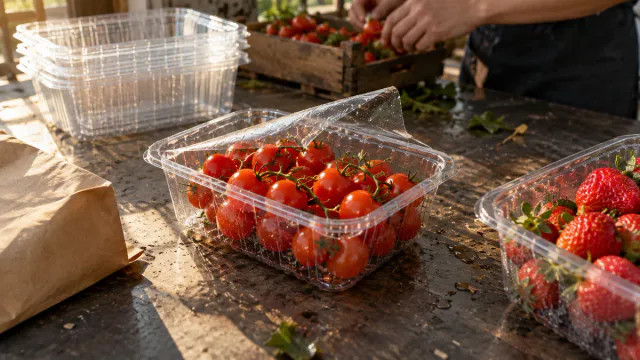
Kurucsai Plastic began as part of an agricultural business, producing thermoformed packaging for its own fruit and vegetable products. The company later expanded into supplying other food-industry customers and increased its thermoforming capacity.
As the business grew, sheet production gradually shifted from PP to PET.
According to Gneuss, the move was driven by demand for packaging that fits established recycling streams and by the growing role of recycled content in the European packaging market. There was also a purchasing consideration. Kurucsai wanted the option to work with several PET feedstocks rather than depend on one resin source when availability or prices move.
That flexibility is useful only if the plant can process those feedstocks consistently. PET brings a familiar complication: it absorbs moisture from the atmosphere, and moisture can cause hydrolytic degradation during melt processing. Conventional PET sheet extrusion therefore normally includes a drying stage ahead of the extruder.
Kurucsai set out to avoid that separate step.
Moving moisture removal into the extrusion process
The installed MRS 110 has a stated PET throughput of up to 600 kg/h. Its distinguishing feature is Gneuss's Multi Rotation System.
Instead of relying on a conventional single-screw melt section alone, the MRS uses multiple satellite screws in a rotating drum. This creates a large, continuously renewed melt surface under vacuum. Gneuss uses that surface exposure to remove moisture and volatile contaminants from the polymer melt.
In Kurucsai's application, the system is designed to accept virgin PET, post-consumer bottle flakes and production regrind without upstream material drying.
PET is still hygroscopic; the MRS does not change the polymer. The difference is where moisture removal takes place. Instead of drying the feedstock in a separate unit before extrusion, the line removes moisture under vacuum from the melt. Performance still depends on throughput, feedstock condition and the vacuum system.
Gneuss says the line has been operating in daily production since its commissioning at the beginning of 2025.
Bottle flakes and regrind make filtration more important
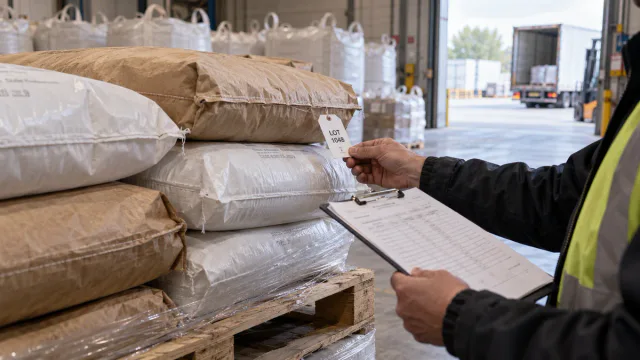
Processing recycled PET asks more of a sheet line than running a stable virgin grade. Incoming material can vary in bulk density, moisture and contamination, while different feedstocks may need to be combined in controlled proportions.
Kurucsai's installation therefore uses gravimetric dosing ahead of extrusion and an RSFgenius rotary melt filter downstream.
The dosing system allows the plant to meter different PET streams to a defined recipe. The RSFgenius continuously removes solid contamination from the melt and uses an integrated backflush system to clean the screen while the process remains online.
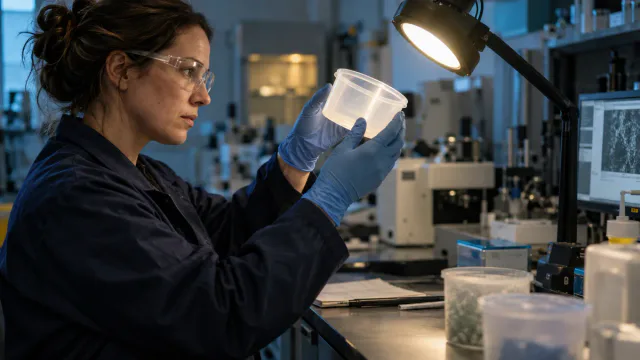
For thermoformed food packaging, this part of the line is easy to underestimate. Forming machines receive the sheet, but many defects are created earlier. Gauge variation, gels, contamination and unstable melt quality can later appear as heating, forming or trimming problems.
A flexible rPET strategy therefore depends on the quality of the sheet-extrusion process as much as on the forming machine itself.
Inline extrusion keeps sheet production and forming connected
After filtration, the PET is converted into sheet and fed directly to Kurucsai's thermoforming lines in an inline arrangement.
Inline production removes intermediate sheet handling and reheating, but it also shortens the distance between an extrusion problem and a forming problem. If melt quality or gauge drifts, the thermoforming process sees it quickly.
That puts more pressure on dosing, filtration and gauge control when recycled feedstock changes from batch to batch. Kurucsai is effectively running sheet extrusion and thermoforming as one connected production system, not as two loosely linked departments.
Food-contact rPET is the next step
The longer-term objective is to increase the use of recycled PET in food packaging.
Gneuss reports that the extrusion process used for the project has FDA approval for producing recycled PET intended for food-contact applications. The company also stated that a customer-specific EFSA application had been submitted, with a decision expected during 2026.
At the time of the July project announcement, that European assessment was still pending. Technical capability alone does not determine food-contact status; permitted use also depends on the approved recycling process, input material and the rules in the target market.
Where the energy saving comes from
The published case does not give a plant-specific percentage for Kurucsai's energy savings. Gneuss attributes the efficiency gain to two changes in the process: the line does not use a separate upstream PET-drying stage, and the finished sheet goes directly into thermoforming.
The absence of a headline percentage is not a weakness. For another thermoformer, the relevant comparison would be the energy balance of the complete line, including drying, extrusion, vacuum, filtration, sheet cooling and forming.
Raw-material flexibility is the other part of the calculation. Kurucsai can run several PET sources on the same extrusion platform, giving the plant more room to respond to recycled-content requirements, resin prices and feedstock availability.
A practical route toward more rPET
Kurucsai's investment is not an argument for replacing PP with PET in every application, and it does not make conventional PET drying obsolete. Material choice still comes down to the package, sealing system, barrier needs, customer specification, recycling route and cost.
The project is more interesting as an example of what happens when recycled PET moves from occasional trials into routine production. Bottle flakes and internal regrind have to be dosed, devolatilised and filtered before the sheet ever reaches the forming machine. In an inline plant, there is little room to treat those steps as somebody else's problem.
Kurucsai now has an MRS 110 line rated at up to 600 kg/h of PET, capable of running several PET feedstocks without conventional upstream drying and feeding sheet directly into thermoforming. The remaining milestone is the customer-specific European food-contact assessment reported by Gneuss.
For thermoformers planning higher recycled content, the lesson is fairly concrete: the forming machine may be where the finished tray takes shape, but the quality of an rPET package is already being decided upstream in material preparation, extrusion and filtration.
Gneuss — MRS Extruder — technical background on MRS extrusion and thermoforming-sheet applications.
Thermoforming
PPWR and Thermoformed Trays: What to Put in Your Packaging Specification
A practical PPWR checklist for buyers of PET and PP trays: phased dates, complete-pack specifications, food-contact evidence and recycled-content records.