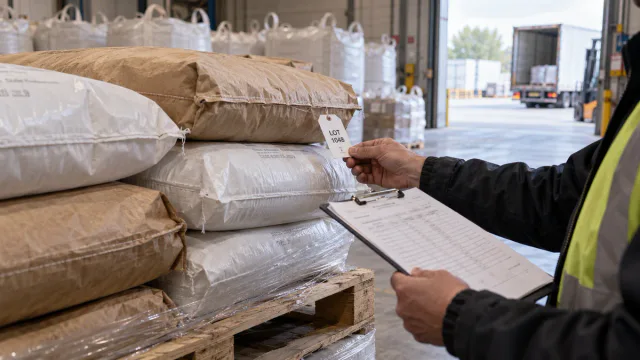
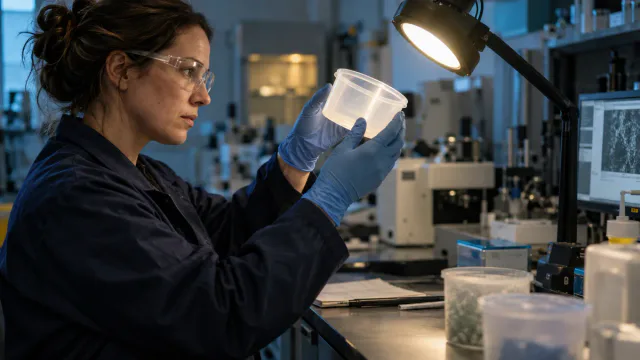
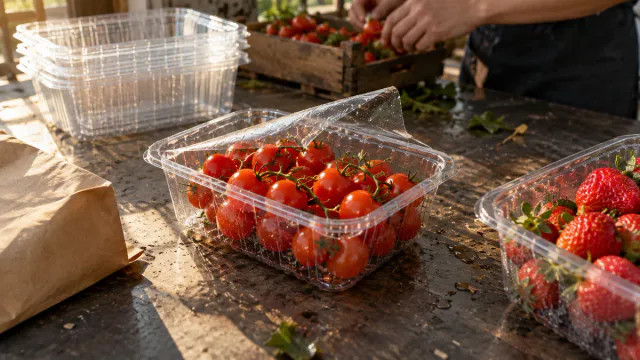
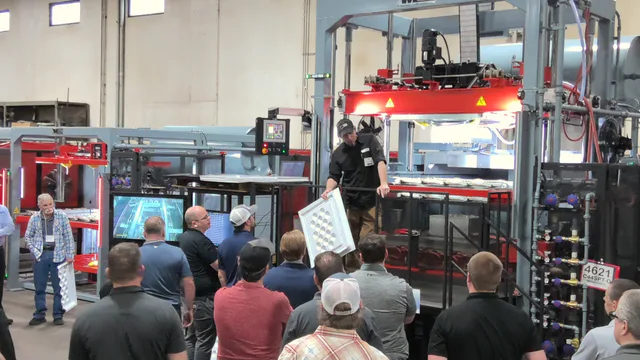
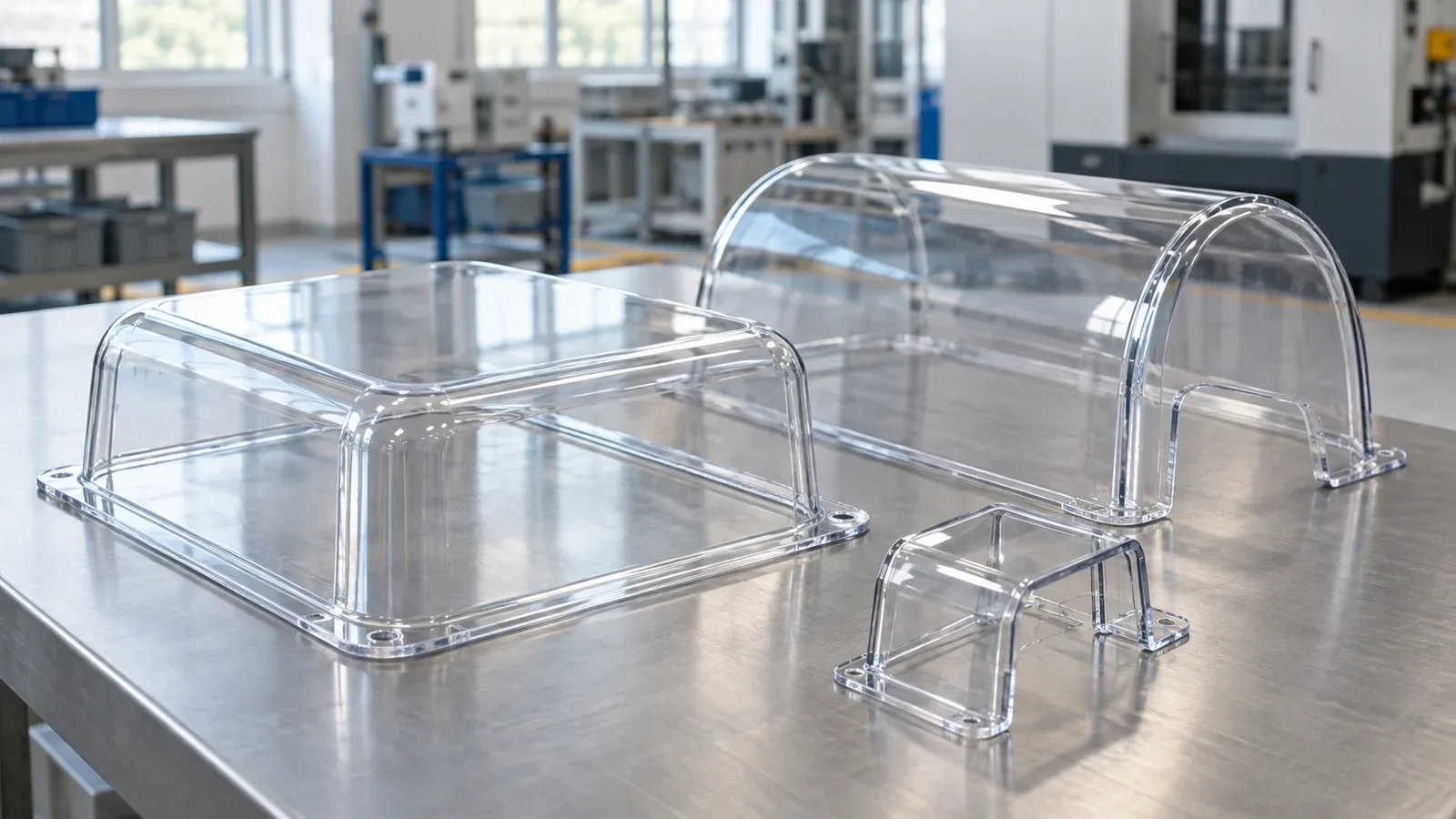
Plastipak's new pakPET Single Pellet Solution combines virgin PET and 30% recycled content in one ready-to-use resin for PET packaging and thermoforming applications.
Image source: Plastipak Packaging. Official image published with the July 9, 2026 product announcement.
Plastipak Packaging has introduced a new PET resin that could make one part of recycled-content management simpler for packaging manufacturers and thermoformers.
The company's pakPET™ Single Pellet Solution combines virgin PET performance with built-in recycled content in a single ready-to-use resin. Plastipak says the material contains 30% recycled content and is suitable for beverage and food containers, home and personal care packaging, pharmaceutical packaging and thermoforming applications.
Join PlasticParts Hub
Create an account to connect with companies and send RFQs.
The product is scheduled for introduction in August 2026 and is manufactured at Plastipak's facility in Verbania, Italy.
For thermoforming companies, the interesting part is not only the recycled-content percentage. It is the format of the material itself. Instead of relying on the processor to combine separate virgin and recycled PET streams to reach a target percentage, pakPET is supplied as one formulated resin with the recycled content already incorporated.
That may sound like a small change, but it addresses a practical issue that sits between sustainability targets and day-to-day production: how to introduce recycled content without creating another variable for the plant to manage.
One pellet instead of two material streams
A conventional approach to incorporating rPET can involve purchasing virgin PET and recycled PET separately, controlling inventory for both materials and blending them at a defined ratio before or during extrusion.
That method can work well, but it places responsibility for the final blend on the processor. Dosing accuracy, material handling, lot changes, contamination control and the consistency of the recycled feedstock all become part of the manufacturing system.
Plastipak's concept moves part of that work upstream.
According to the company, pakPET Single Pellet Solution is supplied as a single resin with 30% recycled content already integrated. Plastipak lists simplified processing and qualification, consistent packaging performance and drop-in compatibility with existing PET operations among the intended benefits.
For a thermoformer that extrudes its own sheet, the proposition is straightforward: the plant receives one PET resin rather than creating the recycled-content ratio itself from two separate feedstocks.
For companies buying extruded sheet rather than producing it internally, the development is still relevant because sheet suppliers may be able to offer more standardized recycled-content formulations based on a single resin specification.
Why the idea matters to thermoforming
PET thermoforming depends heavily on consistency before the sheet ever reaches the forming machine.
Material history affects extrusion behaviour. Moisture control is essential. Intrinsic viscosity, melt behaviour, recycled-content quality and thermal history can influence the sheet that ultimately reaches the thermoforming oven.
Once the sheet is heated and stretched into a mould, those upstream variables interact with heater settings, forming temperature, plug-assist conditions, draw ratio, tool temperature and cooling.
This means a material change should never be evaluated only by looking at its recycled-content percentage.
The practical question for a thermoformer is whether the new material can deliver the required sheet quality and forming window at production scale.
A single-pellet approach does not remove the need for drying, extrusion control or process qualification. It may, however, remove one source of variability: the processor no longer has to create the virgin-to-rPET blend ratio itself.
That distinction is important. Simplifying the material stream is not the same as simplifying the entire thermoforming process, but it can make one part of that process easier to standardize.
30% recycled content arrives as a defined formulation
Plastipak lists 30% recycled content integration as one of the core features of pakPET.
This percentage is significant because recycled-content requirements are becoming an increasingly important part of packaging design and procurement. Brand owners are asking suppliers not only whether a package can be recycled, but also how much recycled material it already contains.
For thermoformed PET packaging, that creates a balancing act.
Processors need to increase recycled content while continuing to meet requirements for clarity, colour, mechanical performance, food-contact suitability where applicable, sealing behaviour and production efficiency.
A defined single-pellet formulation gives purchasing and production teams a clear starting specification. Rather than treating recycled content as an additional ingredient that has to be blended on-site, the resin itself becomes the recycled-content specification.
That could make qualification easier across multiple plants or production lines, particularly when companies want the same nominal recycled-content level across a family of products.
However, individual applications would still need to be tested. A 30% recycled-content resin that performs well in one tray geometry or sheet structure cannot automatically be assumed to behave identically in another.
Drop-in compatibility is attractive, but qualification still matters
Plastipak describes pakPET as having drop-in compatibility with existing PET operations.
For manufacturers, that is an important claim because large-scale packaging equipment is rarely changed simply to accommodate one new sustainability initiative. A material that can run through existing PET infrastructure is easier to evaluate than one requiring major equipment modification.
In thermoforming, though, "drop-in" should not be interpreted as "no process development required."
PET sheet extrusion and thermoforming are sensitive to material condition. Even when a resin can be processed on existing equipment, the optimal drying conditions, extrusion temperatures, sheet cooling, oven profile and forming window may need adjustment.
The correct approach is therefore controlled qualification rather than assumption.
A practical trial should compare the new resin with the current production material using the same part and tool. Useful measurements may include:
sheet thickness variation;
haze and colour;
extrusion pressure and stability;
oven response and sheet sag;
forming window;
minimum wall thickness in critical regions;
trim behaviour;
scrap rate;
cycle time;
sealing and downstream performance where relevant.
If those variables remain stable, then the operational value of a single-pellet recycled-content resin becomes much easier to quantify.
Food-contact approval broadens the potential applications
Plastipak states that pakPET is food-contact approved for applicable packaging applications.
That is particularly relevant to thermoforming because PET is widely used in trays, clamshells, lids and other rigid food packaging formats.
Food-contact status does not mean every finished thermoformed package is automatically approved. The complete package, manufacturing route and intended use still have to comply with the relevant regulatory requirements.
But having a resin developed for applicable food-contact uses expands the range of projects where the material can realistically be considered.
The company also says the post-consumer feedstock has traceability certified through EN 15343, a European standard used for plastics recycling traceability and recycled-content assessment.
For customers buying packaging against recycled-content targets, documented traceability can be as important as the nominal percentage itself.
The potential advantage is operational simplicity
The most interesting question is whether single-pellet recycled PET can reduce the operational complexity that sometimes accompanies recycled-content programmes.
Consider a thermoforming plant that currently uses a separate virgin PET silo and rPET silo. The plant may need to manage two incoming specifications, two inventory positions and a blending system. Production has to verify the blend ratio, and quality teams need to understand whether variation comes from the virgin resin, the recycled resin or the dosing process.
With a single-pellet resin, those variables are consolidated into one purchased material.
This does not guarantee better thermoforming performance, but it potentially simplifies troubleshooting. If a problem appears, the plant has one incoming resin specification rather than a blend created from two different material streams.
That can also simplify operator instructions. Instead of changing blend percentages at the plant, the recycled-content level is fixed by the resin grade.
The trade-off is reduced flexibility. A processor using separate streams can theoretically change the rPET percentage to suit different products. A fixed 30% single-pellet grade is designed around one defined recycled-content level.
Whether that is an advantage or limitation depends on the production mix.
Sheet extrusion remains the critical bridge
For thermoforming, resin is only the first stage.
The material must first become a sheet with controlled thickness, surface quality and thermal behaviour. That sheet then has to be heated uniformly and stretched into the final geometry.
This is why the success of pakPET in thermoforming will depend heavily on sheet-extrusion performance.
The extrusion stage determines whether the recycled-content formulation produces consistent melt quality and whether the sheet remains within the dimensional and optical requirements of the application.
For multilayer structures, processors may also evaluate where the resin is used within the sheet construction. In some applications, recycled-content material can be incorporated into a core layer while functional or regulatory requirements are managed through outer layers. In others, a monolayer structure may be preferred.
Plastipak's announcement does not define a universal sheet architecture, so converters will need to determine the appropriate structure for each product.
A material solution to a regulatory and manufacturing problem
The launch reflects a broader shift in plastics packaging.
For years, sustainability discussions focused heavily on whether a package was technically recyclable. The next stage increasingly involves demonstrating actual recycled-content use while maintaining industrial performance.
That creates pressure on resin producers, recyclers, sheet extruders and thermoformers to make recycled material behave more like a standard production input rather than a special project.
Single-pellet products are one possible response.
Instead of asking every converter to become an expert in blending virgin and recycled material, the resin producer supplies a standardized formulation designed around a specified recycled-content percentage.
If the approach proves stable in sheet extrusion and thermoforming, it could make recycled-content adoption easier for plants that want a more straightforward raw-material system.
What thermoformers should ask before switching
A thermoforming company evaluating pakPET or any comparable recycled-content resin should look beyond the headline percentage.
Key questions include:
Is the resin intended for monolayer sheet, multilayer structures or both?
What drying conditions are recommended before extrusion?
How does the IV compare with the plant's current PET grade?
Is colour or haze affected after sheet extrusion and forming?
Does the material require changes to oven settings or forming temperature?
How consistent is minimum wall thickness on deep or difficult draws?
What food-contact conditions apply to the specific application?
How is recycled content documented and traced?
Can trim skeleton or internal process scrap be reintroduced without disrupting the target composition?
What happens when the plant needs a recycled-content level other than 30%?
These questions turn a sustainability claim into a manufacturing qualification plan.
The bigger opportunity: make rPET routine
The long-term significance of pakPET may be less about one resin grade and more about the direction it represents.
Recycled PET becomes easier to scale when it can be purchased, specified and processed as a repeatable industrial material rather than treated as a separate sustainability experiment.
For thermoforming, that is especially important because the process already has many variables to manage: sheet quality, heating, stretching, tooling, cooling and trimming.
Any material strategy that removes unnecessary complexity without reducing control is worth examining.
Plastipak's Single Pellet Solution is therefore an interesting development for thermoformers not simply because it contains 30% recycled PET, but because it attempts to package recycled content into a more conventional raw-material workflow.
The real test will come on production lines. If converters can extrude consistent sheet, maintain a stable forming window and meet finished-part requirements without adding new operational complications, single-pellet recycled-content resins could become a practical route for making rPET use more routine.
For an industry under pressure to increase recycled content while keeping productivity high, that is a development worth watching.
Editorial note: This article is an original Thermoforming Hub analysis based on the sources above and is not a translation or reproduction of Plastipak's press release.
Publishing note: confirm image reuse rights with Plastipak before publishing the official product image on the public website.
Thermoforming
PPWR and Thermoformed Trays: What to Put in Your Packaging Specification
A practical PPWR checklist for buyers of PET and PP trays: phased dates, complete-pack specifications, food-contact evidence and recycled-content records.