
Reliable insert molding automation connects loading checks, functional tests and rejection. An ARBURG sensor-housing cell provides a practical example for buyers.
Insert molding automation can load an insert repeatedly while still loading the wrong insert, an incorrectly oriented one or a part outside its tolerance. The cell therefore needs more than a successful pick-and-place sequence. It needs a defined inspection decision at each stage, followed by a reliable way to keep accepted and rejected parts separate.
A sensor-housing cell shows the inspection sequence
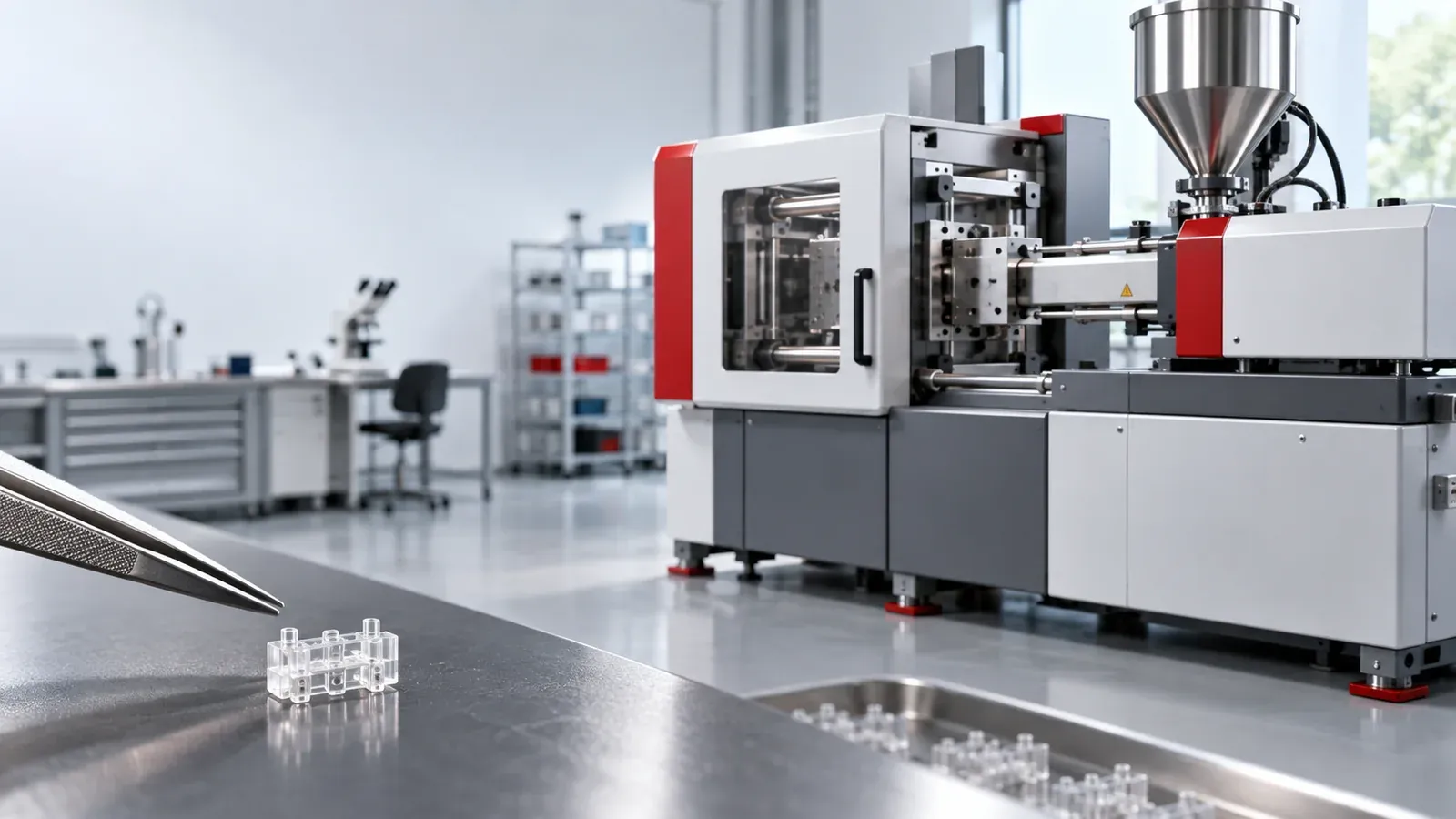
In a July 18, 2025 report, ARBURG describes a cell supplied with RNA to UK processor R A Labone for tire-pressure sensor housings used in heavy goods vehicles. It molds around two metal inserts using an ALLROUNDER 1300 T 1000-290 rotary-table machine, two six-axis robots and a four-cavity tool. Cameras check insert position; downstream checks include continuity and antenna-terminal height. Accepted parts are marked and packed, while failed parts enter a separate chute. ARBURG reports that the cell was designed for about 50,000 parts a week. That figure describes this application, not a general output promise for automated insert molding.
The useful lesson is the sequence of checks. Presence, position, electrical function and rejection each answer a different question.
Check the insert before the mold closes
Define the loading decision cavity by cavity. An inspection may need to confirm the correct insert type, quantity, orientation and seating position. Specify the features that distinguish an acceptable placement from an unacceptable one, rather than relying on a general instruction to inspect the mold.
For a four-cavity tool using two inserts per part, a complete loading event involves eight inserts. The cell needs to account for each required position. A successful image at one location cannot approve the other seven.
Agree what happens after a failed placement check. The response may be an automated retry, a stop for intervention or another validated recovery sequence. The machine must receive the correct release signal only after the loading decision is resolved. Treat the behavior after an interrupted cycle as part of acceptance testing, including a robot stop halfway through loading.