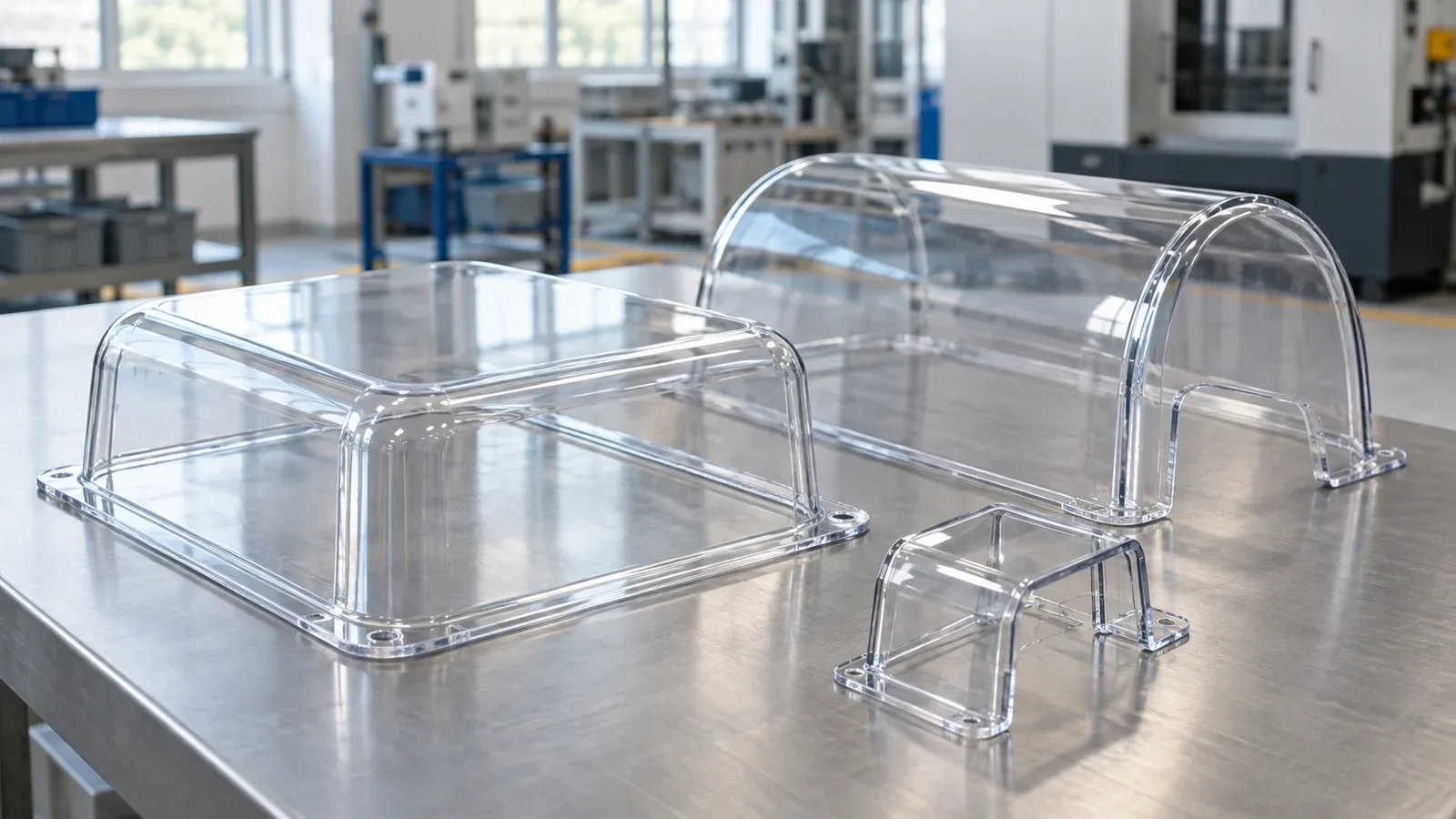
KTPconTeyor has launched a dedicated thermoforming company in Germany, adding in-house capability for reusable transport packaging, custom trays and dunnage systems.
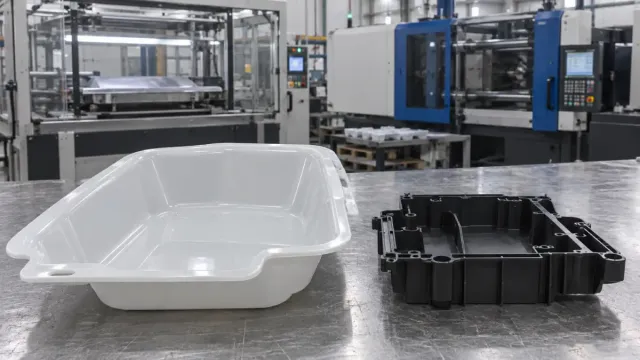
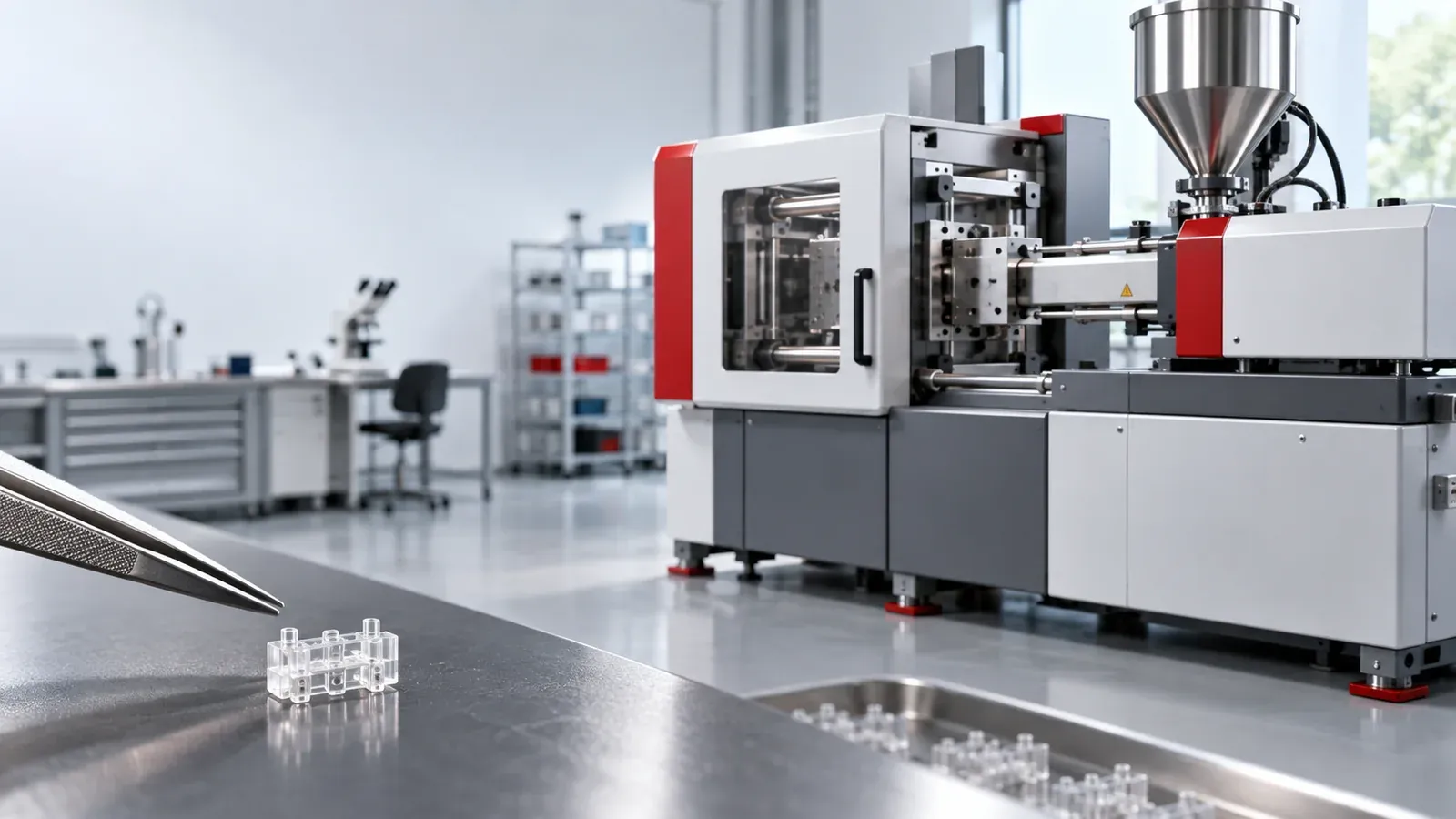
mage source: KTPconTeyor. Vacuum-formed trays used in reusable industrial transport packaging.
KTPconTeyor has made thermoforming a dedicated part of its reusable transport packaging business.
Join PlasticParts Hub
Create an account to connect with companies and send RFQs.
The group announced KTPconTeyor Thermoforming GmbH in July 2026, with VR Equitypartner publishing details on July 23. The operation is based in Haiterbach, Germany, and adds a 35-person thermoforming team to a business already active in reusable plastic containers, steel racks and custom dunnage.
The notable part for thermoformers is where that capacity sits. KTPconTeyor is not selling a tray in isolation; it is combining the formed insert with the outer container, the transported component and the return system around both.
That puts thermoforming into a different operating environment from high-volume disposable packaging. The part may stay in service through repeated handling and transport cycles, so its value depends on how well it performs inside the complete logistics system.
Why KTPconTeyor is bringing thermoforming closer to the core business
KTPconTeyor describes the new unit as part of its "House of Competence" strategy. The group already combines plastic containers, steel systems and several types of custom internal packaging. A dedicated thermoforming operation gives it another process that can be developed alongside those systems rather than specified separately after the main transport package has been designed.
VR Equitypartner, which has KTPconTeyor in its portfolio, said the added capacity is intended to support greater flexibility, shorter development cycles and consistent quality across the product range.
The development stage is where those gains are most plausible. In returnable industrial packaging, the tray is rarely an isolated product. Its geometry can influence nesting density, operator access, empty return volume and the layout of the complete packaging set.
If the outer container, rack and thermoformed insert are developed together, design changes can be tested against the complete packaging system instead of passing through several suppliers.
An in-house model will not suit every project, but it gives KTPconTeyor direct control over a process that already appears in its custom dunnage portfolio.
Thermoformed trays are already part of the packaging mix
KTPconTeyor currently markets vacuum-formed trays for applications including battery components, airbags and other industrial parts. The company lists materials including PS, PP, PC, PVC, ABS and HDPE for its vacuum-forming work.
KTPconTeyor's own application examples make the role clear. A formed tray can locate individual components, separate sensitive surfaces and create repeatable loading positions inside a larger container or steel rack.
In this type of application, geometry is tied directly to logistics. A pocket that is a few millimetres deeper or a flange that occupies unnecessary space can affect how many parts fit into a layer and how many layers fit into the overall transport system.
The design target is therefore broader than producing a part that simply forms well. The tray has to protect the component, survive handling, fit the container, allow practical loading and still make sense when the empty packaging returns through the supply chain.
In that setting, the value of a dedicated thermoforming unit is not limited to extra production capacity.
Reusable packaging changes the priorities for a thermoformed part
Many thermoforming discussions focus on cycle time, sheet cost, wall-thickness distribution and trim. Those remain important in industrial transport packaging, but repeated use adds another set of requirements.
A reusable tray may be loaded, transported, unloaded, stacked, cleaned and returned many times. Corners, ribs, undercuts, lifting points and contact surfaces are therefore judged not only by how they form, but by how they behave after repeated handling.
Material selection also becomes a system decision. Stiffness, impact resistance, temperature exposure, surface sensitivity, cleanability, weight and end-of-life options may all matter more than the lowest sheet price.
KTPconTeyor uses the term "material-agnostic" for its broader packaging strategy. In practice, that means thermoforming is one option alongside textile, foam, PP dividers and other internal packaging technologies. A formed tray makes sense where its geometry, repeatability and material properties solve the transport problem better than those alternatives.
The company is therefore treating thermoforming as one engineering option among several, not as the default answer for every dunnage application.
A 35-person operation gives the expansion more weight
The new company will be led by Andreas Hartl, who KTPconTeyor says has more than 25 years of thermoforming experience. The group also said that 35 employees are joining the new entity.
With 35 employees and a separate operating company, this is more than the addition of a forming cell to an existing site. KTPconTeyor is building the capability around its own leadership and production base in Haiterbach.
The location also appears in the group's global network as KTPconTeyor Thermoforming GmbH, confirming that the operation is being presented as a permanent part of the wider organisation.
The move follows the combination of KTP Kunststoff Palettentechnik and conTeyor International in 2024. According to VR Equitypartner, the thermoforming company is the next strategic step in developing the combined group.
Faster development will depend on how closely the processes are integrated
Bringing thermoforming in-house can shorten the path between a packaging concept and a physical prototype, but only if the engineering teams work as one development process.
For a custom transport tray, the useful inputs often come from outside the thermoforming machine: CAD data for the transported component, rack dimensions, robotic handling requirements, operator access, stacking limits and return ratios.
Tool design then has to translate those constraints into draft, radii, depth, sheet thickness and trim geometry that can be produced consistently.
A thermoforming team working directly with container and dunnage designers can challenge an impractical pocket geometry early, before it becomes a tool change or a transport problem later in the project.
The benefit is less about owning a forming machine and more about reducing the distance between packaging design, tooling decisions and production feedback.
Thermoforming has a place well beyond single-use packaging
The announcement also points to a part of the thermoforming market that receives less attention than disposable packaging.
Food trays, cups and retail packaging attract much of the industry's attention because they run at high volumes and sit directly inside the current debate around packaging waste and recycling regulation. Industrial thermoforming follows a different set of economics.
Volumes may be lower, parts can be larger or more specialised, and the value of the formed product may come from protecting an expensive component or improving a logistics loop rather than minimising the cost of one package.
Reusable transport packaging makes that distinction especially clear. The thermoformed insert is part of an asset that can remain in service across repeated shipments. Its value has to be measured against damage prevention, packing density, handling time and the cost of running the complete transport loop.
This does not remove sustainability questions. Reusable packaging still has to justify its material use, transport distances, cleaning requirements and eventual end of life. A heavier reusable system is not automatically the better environmental choice simply because it can be used again.
Industrial thermoforming can therefore be engineered around a very different use model from disposable packaging.
What the expansion means for industrial thermoformers
KTPconTeyor's move puts more thermoforming capability inside a company whose main customer proposition is complete packaging systems rather than formed parts alone.
For independent thermoformers serving industrial markets, the competitive reference point is often the full logistics system rather than tooling cost or piece price alone.
Suppliers that understand the surrounding application — container dimensions, packing density, component handling and return logistics — can compete on more than forming capacity.
The same applies to design. An industrial tray that saves material but reduces the number of components per container may be a poor optimisation. A slightly more expensive insert that improves nesting, protects a high-value part or cuts manual handling can create more value elsewhere in the system.
KTPconTeyor's strategy is to keep more of those decisions within one group.
A different growth path for thermoforming
The launch of KTPconTeyor Thermoforming GmbH does not introduce a new forming technology. Its significance lies in the business model around the process.
A reusable packaging group has decided that thermoforming is important enough to support with a dedicated company, an experienced managing director and a 35-person team. The operation will sit alongside plastic containers, steel racks and other dunnage technologies rather than operate as a standalone supplier of formed parts.
For industrial thermoformers, the expansion shows one route to new business: move closer to the logistics problem the formed part is meant to solve. Demand does not have to be tied only to faster packaging lines or higher volumes of disposable trays. It can also come from reusable systems in which the formed component is designed as part of a long-life transport asset.
KTPconTeyor now has that capability in-house. The next test will be visible in the projects that come out of Haiterbach: how much the tighter connection between thermoforming, container design and custom dunnage changes development speed, product design and the economics of reusable transport packaging.