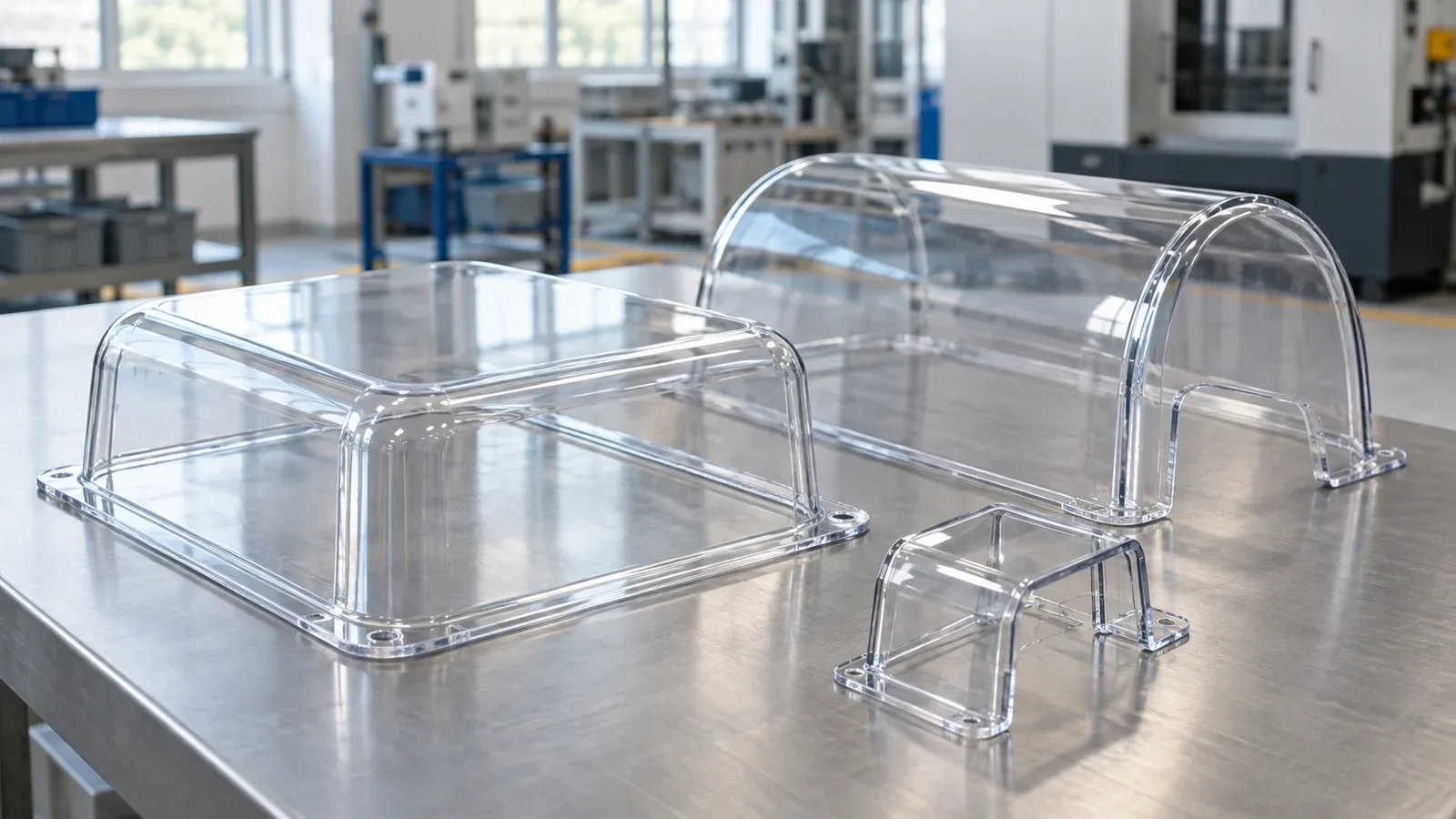
Compare ABS, HIPS, PETG, PP and other thermoforming plastics by forming behavior, part requirements, finish and cost to choose the right sheet material.
Choosing a plastic for thermoforming is not a matter of selecting the cheapest sheet that can be heated and shaped. The material affects forming temperature, wall-thickness distribution, surface quality, impact strength, chemical resistance, trimming, assembly, compliance, and the long-term performance of the finished part.
The right choice begins with the application rather than the polymer name. A clear medical tray, an outdoor machine cover, a reusable transport pallet, and a refrigerator liner may all be thermoformed, but they place different demands on the sheet. Readers who need an overview of heating, forming, cooling, and trimming can first review What Is Thermoforming? Process, Types and Applications. This guide focuses on the most common thermoforming materials and the questions that help narrow the options before tooling begins.
Join PlasticParts Hub
Create an account to connect with companies and send RFQs.
Before comparing materials, define what the part must do in service. A useful specification should cover:
operating temperature and expected temperature changes;
indoor or outdoor exposure;
impact, stiffness, and load requirements;
transparency, colour, gloss, texture, and surface quality;
contact with food, chemicals, cleaners, oils, or fuels;
flame, smoke, electrical, or regulatory requirements;
expected product life and cleaning cycles;
forming depth, radii, undercuts, and target wall thickness;
trimming, bonding, welding, printing, or painting;
annual volume, recycled-content goals, and target cost.
These details are more useful than asking for “a strong plastic” or “a food-safe sheet.” Performance and compliance depend on the exact grade, thickness, additives, colour, processing history, and intended use. The material supplier and thermoformer should confirm the final specification.
How plastic materials for thermoforming differ
Thermoplastic sheets soften when heated and become rigid again as they cool. That shared behaviour does not make them interchangeable.
Some materials have a broad forming window. Others need close temperature control, pre-drying, heated tooling, or careful cooling. Amorphous plastics generally soften over a range of temperatures, while semi-crystalline plastics can change more quickly near their processing range and may shrink differently during cooling.
Sheet manufacture matters too. Extrusion direction, thickness tolerance, residual stress, protective film, colour, cap layers, recycled content, and moisture condition can affect forming. Two sheets from the same polymer family may behave differently on the same tool.
Common thermoforming materials
ABS
ABS is widely used for equipment housings, vehicle interiors, appliance parts, covers, and panels. It offers a useful balance of impact resistance, stiffness, appearance, and machinability.
It is available in many colours and textures and may be supplied with a surface cap for improved appearance or weather performance. ABS is often straightforward to trim, drill, bond, paint, and assemble.
Standard ABS is not automatically suitable for prolonged outdoor exposure, high heat, food contact, or flame-regulated applications. Those requirements call for a verified grade or a different material.
HIPS
High-impact polystyrene is an economical option for trays, displays, refrigerator liners, packaging, prototypes, and general-purpose parts. It forms easily, trims cleanly, and is available in many colours.
HIPS is often selected when cost, appearance, and processability matter more than demanding impact, temperature, or chemical performance. It can suit short-life products and indoor applications, but service conditions should be checked.
PET and APET
PET sheet is common in clear packaging, food trays, clamshells, and other thin-gauge products. It can provide clarity, stiffness, and barrier performance, depending on the grade and sheet construction.
Processing control matters because PET behaviour depends on temperature history, crystallisation, moisture, and formulation. Food-contact or recycled-content claims must be supported by supplier documentation for the intended market and use.
PETG and other copolyesters
PETG is used for clear displays, medical packaging, trays, guards, and covers that need clarity and toughness. Many copolyester grades offer a broad processing range, good detail, and clean trimming.
Not every copolyester behaves the same way. Drying requirements, sterilisation compatibility, chemical resistance, and service temperature vary by grade. Qualification should be based on supplier data rather than the generic PETG name.
Polypropylene
PP is valued for low density, chemical resistance, fatigue performance, and use in packaging and reusable products. Applications include trays, containers, liners, automotive parts, and components with integral hinges.
Polypropylene can require tighter heating and cooling control than more forgiving amorphous sheets. Shrinkage and dimensional change must be considered in the tool and trimming plan. The selected grade should match the required stiffness, impact performance, and temperature range.
HDPE
High-density polyethylene is used for reusable trays, liners, tanks, pallets, agricultural products, guards, and rugged industrial components. It offers good impact and chemical resistance where durability matters more than a high-gloss surface.
HDPE has relatively high shrinkage and can be difficult to bond or paint without suitable treatment. Tool design, cooling, fixtures, and assembly methods should reflect those characteristics.
PVC
PVC sheet is used in packaging, displays, signs, liners, and specialist industrial applications. Depending on formulation, it can provide clarity, chemical resistance, printability, or flame-performance options.
PVC processing requires appropriate temperature control and ventilation. Regulations, additives, disposal routes, and customer restrictions vary by market, so the exact grade and application must be reviewed.
Acrylic (PMMA)
Acrylic is chosen for high clarity, gloss, weather resistance, lighting covers, signs, displays, sanitary products, and visible architectural components. It can produce an attractive, rigid part with strong optical quality.
Its impact resistance is lower than that of polycarbonate or some copolyesters. Forming temperature, masking, surface condition, radii, and cooling need attention to avoid marks or cracking.
Polycarbonate
Polycarbonate is considered when impact resistance, transparency, heat performance, or demanding technical properties are important. Applications include machine guards, transport interiors, protective covers, lighting components, and housings.
It usually costs more than general-purpose sheet and commonly requires controlled drying and processing. Stress, chemical exposure, coatings, flame requirements, and UV conditions should be evaluated for the exact grade.
TPO and multilayer sheets
Thermoplastic olefin sheets are used in vehicle, recreational, and outdoor products where impact, low-temperature performance, texture, or weatherability may be required. Multilayer sheets can combine a structural substrate with a cosmetic, UV-resistant, chemical-resistant, or decorative surface.
These constructions can solve requirements that a single polymer cannot, but they also affect forming, trimming, recycling, repair, and cost. The cap layer must remain suitable after stretching in deep areas.
Match the material to the forming geometry
A material that performs well in a flat test sample may behave differently in a deep mould. As the sheet stretches, corners and sidewalls become thinner. Melt strength, heating uniformity, sheet orientation, plug-assist design, and mould geometry influence the final distribution.
Deep draws, narrow channels, sharp transitions, and textured surfaces deserve early trials. Increasing the starting thickness is not always the best answer; it may add cost and cooling time without correcting poor material flow.
The thermoformer should review draft angles, radii, trim lines, surface side, and critical thickness zones before the production tool is finalised.
Consider finishing and assembly
Material selection continues after forming. ABS and HIPS are often easy to machine and finish. Polyolefins such as PP and HDPE may need special surface treatment, welding, or mechanical fastening. Clear materials require careful handling to prevent scratches.
Printed, painted, bonded, or coated parts need compatible inks, adhesives, primers, and cleaners. Protective film can preserve a cosmetic surface, but it must be approved for the heating cycle.
Recycled content and material efficiency
Recycled content must be specified with the same discipline as any other property. Colour consistency, contamination control, odour, mechanical performance, regulatory status, and batch variation may affect the project.
Post-industrial regrind, post-consumer material, coextruded structures, and certified recycled-content grades are different options. The best route depends on the product, available recycling stream, customer requirements, and whether trim scrap can be recovered.
Material efficiency also depends on nesting, trim allowance, sheet size, and rejects. A more expensive sheet can lower total cost if it forms consistently and reduces waste.
How to make the final choice
A practical material-selection process is straightforward:
Define service conditions and mandatory approvals.
Identify two or three realistic polymer families.
Compare available grades, thicknesses, colours, textures, and minimum order quantities.
Review forming, trimming, joining, and finishing with the thermoformer.
Test representative material on prototype or production-intent tooling.
Approve the final grade and documentation before serial production.
Do not approve a project using only a generic polymer name. Record the manufacturer, grade, sheet construction, thickness tolerance, colour, surface, protective film, and required certifications.
Once the material family and required grade are defined, the next step is finding a manufacturer with relevant forming, tooling, trimming, and quality experience. Read How to Find the Right Thermoforming Companies and Suppliers for a practical supplier-comparison process based on real project requirements.
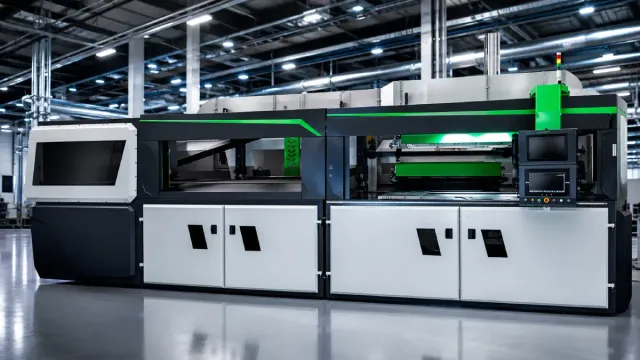
Tools Factory’s ENERGYLINE vacuum thermoforming series has been nominated for Poland’s “Teraz Polska” promotional emblem, highlighting its energy-saving dynamic heating system.