Compare vacuum forming and pressure forming by surface detail, tooling, materials, tolerances and production cost to choose the right process for your part.
Vacuum forming and pressure forming belong to the same thermoforming family, but they are not interchangeable names for the same result. Both begin with a heated thermoplastic sheet and a mould. The difference is how strongly the sheet is driven against the tool and what level of detail the process is expected to reproduce.
The choice is not simply “basic” versus “better.” Vacuum forming can be the most efficient route for a large industrial cover, tray, liner, or functional housing. Pressure forming can justify its additional tooling and control when a visible part needs sharper features, defined texture, or a more injection-moulded appearance. The right answer depends on the product.
Join PlasticParts Hub
Create an account to connect with companies and send RFQs.
Readers can begin with What Is Thermoforming? Process, Types and Applications.
What changes between the two processes?
In vacuum forming, air is removed from between the heated sheet and the mould. Atmospheric pressure pushes the plastic against the tool surface. Pre-stretching, plug assists, or mechanical movement may help distribute the sheet before final vacuum is applied.
Pressure forming also uses vacuum beneath the sheet but adds positive air pressure above it. This creates a stronger pressure differential and presses the material more firmly into surface detail.
That extra force is useful, but it does not correct every design problem. Poor heating, inadequate venting, sharp transitions, weak sealing, or unsuitable material can still cause incomplete forming and uneven walls.
Compare the required surface detail
Surface definition is often the clearest reason to consider pressure forming.
Vacuum forming can reproduce broad textures, radii, recesses, logos, and functional details, especially when the mould is well vented and the sheet reaches the correct temperature. It is commonly suitable when the part needs a clean industrial finish rather than very sharp cosmetic features.
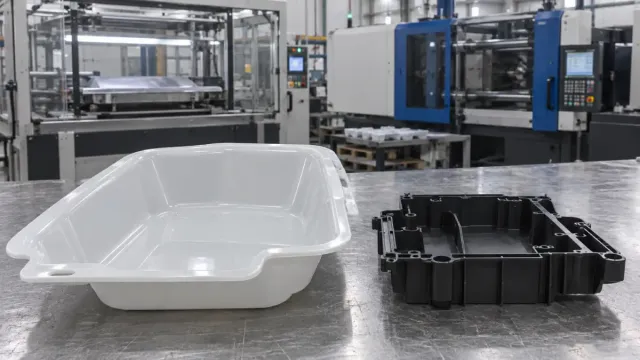
Pressure forming can capture finer texture, tighter corners, crisp lettering, recessed controls, and more pronounced feature transitions. It is often used for medical equipment housings, electronics enclosures, control panels, transport interiors, and other visible parts where the formed surface is part of the product design.
Identify the visible area before tooling begins. Both processes give the strongest definition on the tool-contact side.
Do not choose by appearance alone
A simple-looking part may still need pressure forming because of local detail or texture. A prominent part may work well with vacuum forming if the geometry is broad and the sheet already provides the required finish.
Ask which features genuinely need extra definition. A secondary operation, insert, printed graphic, or small design change may avoid moving the entire project to a more demanding process. The goal is to meet the specification without unnecessary tooling or validation work.
Part size, depth, and material distribution
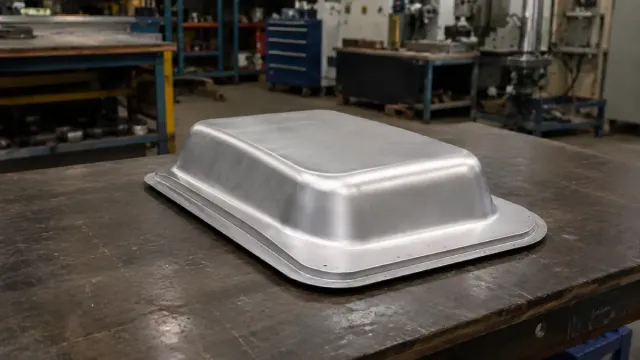
Both processes can form large parts. Vacuum forming is widely used for housings, vehicle panels, liners, guards, displays, and industrial covers. Pressure forming also handles substantial components, but machine capacity, sealing area, and tool strength affect practical size and cost.
Neither process automatically produces uniform wall thickness. The sheet stretches as it travels across the mould. Deep walls, corners, and tall features can become thinner than broad shallow regions.
Pressure improves tool contact but does not create additional material. Deep draws may still need zoned heating, plug assists, or geometry changes. Select the starting thickness and polymer around final wall requirements.
Vacuum-forming tools may be straightforward for shallow or functional parts, although production moulds can still include controlled cooling, detailed vacuum circuits, textures, inserts, and release systems.
Pressure-forming tools usually need stronger construction, effective sealing, consistent venting, and controlled temperature. Fine features require carefully positioned vacuum holes or slots.
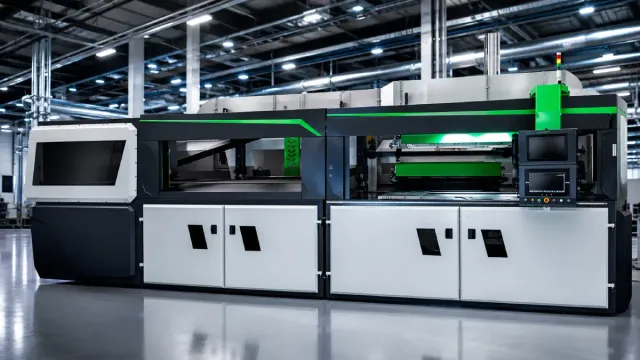
The machine must be designed for the pressure-forming cycle. Adding compressed air to a vacuum-forming setup does not automatically create a reliable process. Clamping, sealing, tool strength, controls, and safety systems all matter.
Compare tooling as a complete validated system, not only as the price of the mould block.
Draft, radii, and release
Pressure forming can reproduce sharper geometry, but the part must still release from the tool. Draft remains necessary, and deep texture or tall male features may require more of it.
Vacuum-formed designs often use generous radii and transitions to help the sheet flow. Pressure forming may allow tighter-looking features, yet extremely sharp corners can still create thin material, stress, cooling problems, or difficult release.
A feature that appears correctly in one sample is not useful if it sticks, distorts, or varies during production.
Tolerances and repeatability
Pressure forming is often chosen for parts with stronger cosmetic and dimensional expectations. Greater forming force can improve tool contact, but total accuracy still depends on material temperature, sheet variation, shrinkage, cooling, release, and trimming.
Vacuum forming can also produce repeatable engineered parts when datums, tool-side dimensions, trim fixtures, and inspection methods are planned correctly.
For either process, separate:
dimensions controlled directly by the mould;
CNC-trimmed holes and edges;
free-side surfaces;
flexible large panels;
assembly interfaces;
cosmetic acceptance criteria.
Do not assign tight tolerances to every feature because one process sounds more precise. Specify what the product function actually requires.
Production volume and total cost
Vacuum forming is often economical for prototypes, low and medium volumes, and large parts where simpler tooling is valuable. It is also used in automated high-volume packaging, so it should not be treated only as a short-run process.
Pressure forming commonly serves low-to-medium and medium-volume cosmetic or technical components where additional appearance and detail justify higher tooling and process costs.
There is no universal break-even quantity. Part size, tooling, cycle time, scrap, trimming, labour, finishing, and product life all affect the calculation.
A pressure-formed part may reduce painting, assembly, or decorative finishing. In that case, higher forming cost can lower total product cost. Paying for pressure forming makes little sense when the customer cannot see or use the extra detail.
Materials and sheet appearance
Many common thermoforming materials work in either process, but the exact grade must suit the required temperature, stretch, texture, and service conditions.
Pressure forming may take advantage of pre-coloured, textured, capped, or multilayer sheet to create a finished cosmetic surface without painting. The cap layer must remain acceptable after stretching, particularly over deep features.
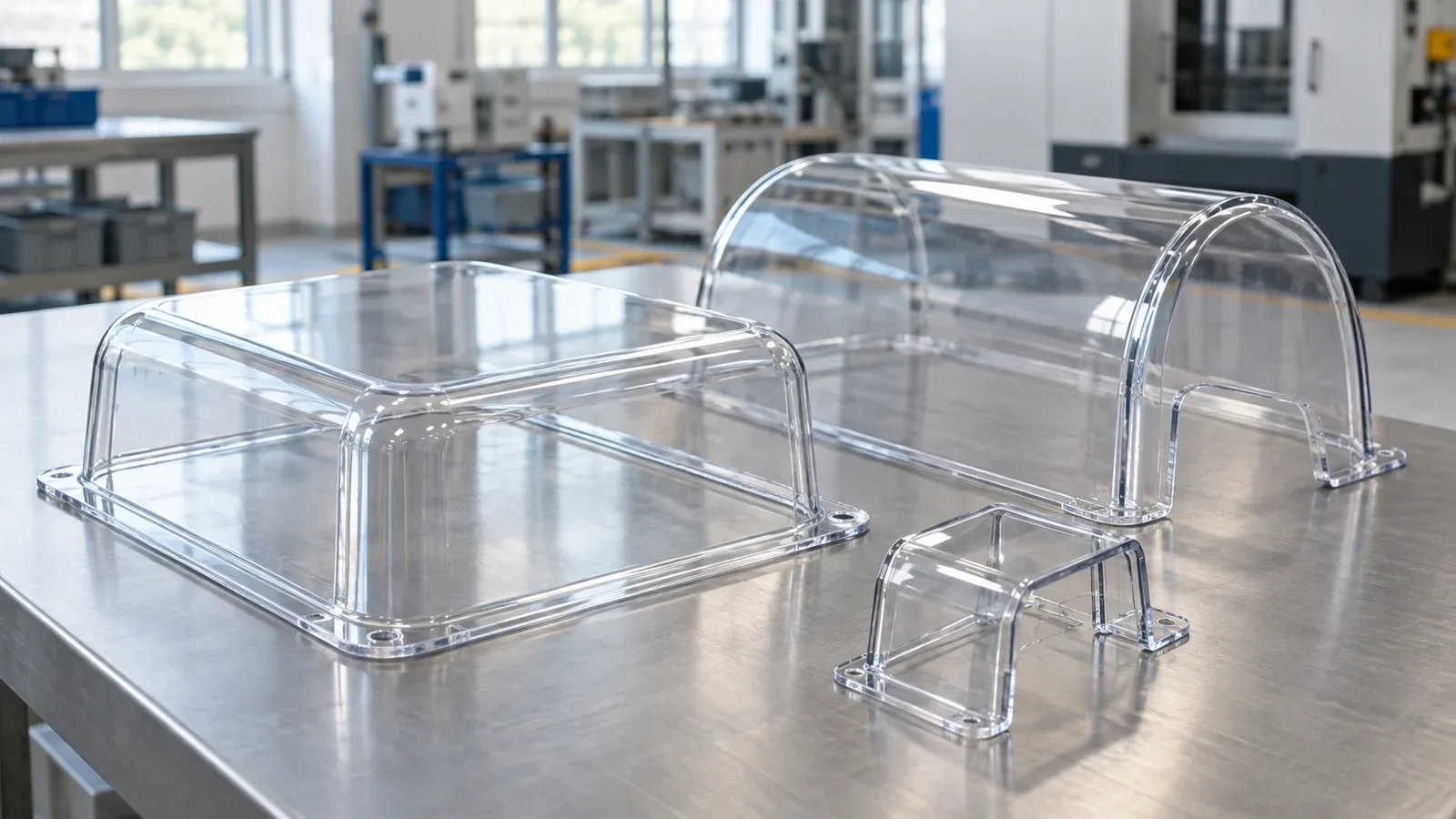
Clear materials require special attention because optical distortion, vacuum marks, chill marks, and contamination may be highly visible. The process should be tested with the production-intent grade and thickness.
Secondary operations still matter
Both processes usually need trimming. Heavy-gauge parts may also require drilling, routing, inserts, bonding, welding, printing, painting, or assembly.
Pressure forming can integrate more visual detail, but it does not automatically eliminate these operations. Compare the complete manufacturing route rather than only the part leaving the forming machine.
Vacuum forming vs pressure forming: practical comparison
Decision factor
Vacuum forming often fits when
Pressure forming often fits when
Surface detail
Broad features and a practical industrial finish are sufficient
Sharper texture, lettering, recesses, or cosmetic detail are required
Part type
Large covers, trays, liners, guards, and functional shells
Visible housings, bezels, panels, and detailed enclosures
Tooling
A simpler forming system can meet the specification
Stronger tooling, sealing, and process control are justified
Geometry
Generous radii and broad transitions suit the product
Tighter definition and local detail matter
Finish
Sheet colour and texture already provide an acceptable surface
The surface must approach an injection-moulded appearance
Economics
Additional pressure would add little product value
Better formed detail can replace finishing or assembly work
Questions to answer before choosing
Which surface is visible and which side contacts the mould?
What detail, texture, lettering, or corner definition is mandatory?
Can the geometry use larger radii or simpler transitions?
What final wall thickness is required in critical areas?
Which sheet grade, colour, texture, and cap construction will be used?
What tolerances apply to formed surfaces and trimmed features?
Will pressure forming remove painting, assembly, or decorative operations?
What tooling budget and production volume are realistic?
Does the supplier have suitable machine capacity and relevant examples?
How will the part be inspected and approved?
Choose the process that adds value
Vacuum forming and pressure forming are complementary methods. Vacuum forming is often the rational choice for functional shapes, broad geometry, large parts, and projects where added surface definition would not improve the product. Pressure forming earns its place when sharper detail, texture, cosmetic quality, or integrated visual features create measurable value.
The correct process is the least complicated route that consistently meets the specification. When comparing manufacturers, use How to Find the Right Thermoforming Companies and Suppliers to evaluate tooling, machine capacity, trimming, quality, and relevant experience.